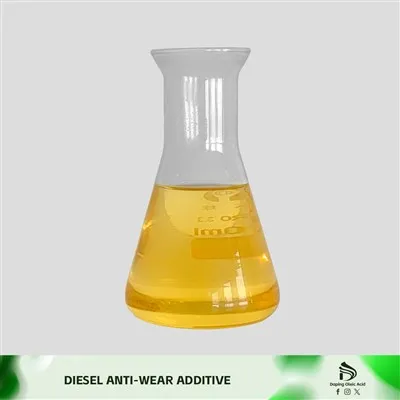
-
![Metal Cutting Fluid Raw Materials]() Metal Cutting Fluid Raw MaterialsDescription: Vegetable BaseAppearance: Liquid/Semi-SolidApplications: FAC is produced through hydrolysis, distillation, and other processes based on soybean oil. Suitable for dimmer acid, alkyd resin, surfactant, synthetic detergent, andread more
Metal Cutting Fluid Raw MaterialsDescription: Vegetable BaseAppearance: Liquid/Semi-SolidApplications: FAC is produced through hydrolysis, distillation, and other processes based on soybean oil. Suitable for dimmer acid, alkyd resin, surfactant, synthetic detergent, andread more -
![Alkyd Resin Raw Materials]() Alkyd Resin Raw MaterialsDescription: Vegetable BaseAppearance: Liquid/Semi-SolidApplications: FAC is produced through hydrolysis, distillation, and other processes based on soybean oil. Suitable for dimmer acid, alkyd resin, surfactant, synthetic detergent, andread more
Alkyd Resin Raw MaterialsDescription: Vegetable BaseAppearance: Liquid/Semi-SolidApplications: FAC is produced through hydrolysis, distillation, and other processes based on soybean oil. Suitable for dimmer acid, alkyd resin, surfactant, synthetic detergent, andread more -
![Distilled Tallow Fatty Acid]() Distilled Tallow Fatty AcidDescription: Vegetable BaseAppearance: Liquid/Semi-SolidApplications: FAC is produced through hydrolysis, distillation, and other processes based on soybean oil. Suitable for dimmer acid, alkyd resin, surfactant, synthetic detergent, andread more
Distilled Tallow Fatty AcidDescription: Vegetable BaseAppearance: Liquid/Semi-SolidApplications: FAC is produced through hydrolysis, distillation, and other processes based on soybean oil. Suitable for dimmer acid, alkyd resin, surfactant, synthetic detergent, andread more -
![Coconut Fatty Acid Suppliers]() Coconut Fatty Acid SuppliersDescription: Vegetable BaseAppearance: Liquid/Semi-SolidApplications: FAC is produced through hydrolysis, distillation, and other processes based on soybean oil. Suitable for dimmer acid, alkyd resin, surfactant, synthetic detergent, andread more
Coconut Fatty Acid SuppliersDescription: Vegetable BaseAppearance: Liquid/Semi-SolidApplications: FAC is produced through hydrolysis, distillation, and other processes based on soybean oil. Suitable for dimmer acid, alkyd resin, surfactant, synthetic detergent, andread more -
![Rice Bran Fatty Acid Manufacturers]() Rice Bran Fatty Acid ManufacturersDescription: Vegetable BaseAppearance: Liquid/Semi-SolidApplications: FAC is produced through hydrolysis, distillation, and other processes based on soybean oil. Suitable for dimmer acid, alkyd resin, surfactant, synthetic detergent, andread more
Rice Bran Fatty Acid ManufacturersDescription: Vegetable BaseAppearance: Liquid/Semi-SolidApplications: FAC is produced through hydrolysis, distillation, and other processes based on soybean oil. Suitable for dimmer acid, alkyd resin, surfactant, synthetic detergent, andread more -
![Palm Fatty Acid Price]() Palm Fatty Acid PriceDescription: Vegetable BaseAppearance: Liquid/Semi-SolidApplications: FAC is produced through hydrolysis, distillation, and other processes based on soybean oil. Suitable for dimmer acid, alkyd resin, surfactant, synthetic detergent, andread more
Palm Fatty Acid PriceDescription: Vegetable BaseAppearance: Liquid/Semi-SolidApplications: FAC is produced through hydrolysis, distillation, and other processes based on soybean oil. Suitable for dimmer acid, alkyd resin, surfactant, synthetic detergent, andread more -
![Hydrolyzed Fatty Acids]() Hydrolyzed Fatty AcidsDescription: Vegetable BaseAppearance: Liquid/Semi-SolidApplications: FAC is produced through hydrolysis, distillation, and other processes based on soybean oil. Suitable for dimmer acid, alkyd resin, surfactant, synthetic detergent, andread more
Hydrolyzed Fatty AcidsDescription: Vegetable BaseAppearance: Liquid/Semi-SolidApplications: FAC is produced through hydrolysis, distillation, and other processes based on soybean oil. Suitable for dimmer acid, alkyd resin, surfactant, synthetic detergent, andread more -
![Soybean Oil Acid]() Soybean Oil AcidDescription: Vegetable BaseAppearance: Liquid/Semi-SolidApplications: FAC is produced through hydrolysis, distillation, and other processes based on soybean oil. Suitable for dimmer acid, alkyd resin, surfactant, synthetic detergent, andread more
Soybean Oil AcidDescription: Vegetable BaseAppearance: Liquid/Semi-SolidApplications: FAC is produced through hydrolysis, distillation, and other processes based on soybean oil. Suitable for dimmer acid, alkyd resin, surfactant, synthetic detergent, andread more -
![Soybean Oleic Acid]() Soybean Oleic AcidDescription: Vegetable BaseAppearance: Liquid/Semi-SolidApplications: FAC is produced through hydrolysis, distillation, and other processes based on soybean oil. Suitable for dimmer acid, alkyd resin, surfactant, synthetic detergent, andread more
Soybean Oleic AcidDescription: Vegetable BaseAppearance: Liquid/Semi-SolidApplications: FAC is produced through hydrolysis, distillation, and other processes based on soybean oil. Suitable for dimmer acid, alkyd resin, surfactant, synthetic detergent, andread more -
![Soybean Oil Linoleic Acid]() Soybean Oil Linoleic AcidDescription: Vegetable BaseAppearance: Liquid/Semi-SolidApplications: FAC is produced through hydrolysis, distillation, and other processes based on soybean oil. Suitable for dimmer acid, alkyd resin, surfactant, synthetic detergent, andread more
Soybean Oil Linoleic AcidDescription: Vegetable BaseAppearance: Liquid/Semi-SolidApplications: FAC is produced through hydrolysis, distillation, and other processes based on soybean oil. Suitable for dimmer acid, alkyd resin, surfactant, synthetic detergent, andread more -
![Soybean Fatty Acid]() Soybean Fatty AcidDescription: Vegetable BaseAppearance: Liquid/Semi-SolidApplications: FAC is produced through hydrolysis, distillation, and other processes based on soybean oil. Suitable for dimmer acid, alkyd resin, surfactant, synthetic detergent, andread more
Soybean Fatty AcidDescription: Vegetable BaseAppearance: Liquid/Semi-SolidApplications: FAC is produced through hydrolysis, distillation, and other processes based on soybean oil. Suitable for dimmer acid, alkyd resin, surfactant, synthetic detergent, andread more -
![Soybean Acid]() Soybean AcidDescription: Vegetable BaseAppearance: Liquid/Semi-SolidApplications: FAC is produced through hydrolysis, distillation, and other processes based on soybean oil. Suitable for dimmer acid, alkyd resin, surfactant, synthetic detergent, andread more
Soybean AcidDescription: Vegetable BaseAppearance: Liquid/Semi-SolidApplications: FAC is produced through hydrolysis, distillation, and other processes based on soybean oil. Suitable for dimmer acid, alkyd resin, surfactant, synthetic detergent, andread more


Rich Experience
Our corporation was established in 1988 and it's a large-scale private enterprise specializing in production, processing, research and development of soybean oil chemicals. With a history of 30 years on oil industry from 1988 to 2018, it enjoys great reputation in the industry.
Reliable Product Quality
Our corporation takes soybean oil production or tallow production as the raw materials, adpops the most advanced equipments and special rectification techniques to to produce genuine oleic acid and high quality streaic acid etc.
Wide Range Of Applications
Our production have been widely applied to chemical and medical industries, etc which are the indispensable basic materials.
Reliable Customer Support
Our team provides reliable customer support, and we take pride in our prompt response and resolution time.resolution time.
Refined soya fatty acid refers to a type of fatty acid derived from soybeans that has been processed to remove impurities and improve its quality. It is obtained through the hydrolysis of soy oil, which separates the fatty acids from the glycerides. The resulting fatty acids are then refined through various processes to remove unwanted components and enhance their stability and usability.
Excellent Emulsifying Properties
Soya fatty acid exhibits strong emulsifying capabilities, allowing it to effectively stabilize mixtures of oil and water. This property is crucial in the production of soaps, detergents, cosmetics, and other products that require a stable emulsion.
Versatile Usage
Soya fatty acid can be used in a wide range of applications, including lubricants, paints, coatings, and textile treatments. Its versatility allows manufacturers to incorporate it into various formulations to achieve desired properties and functionalities.
Biodegradable and Non-toxic
Soya fatty acid is biodegradable, meaning it can be broken down by natural processes, reducing the environmental impact of its disposal. Additionally, it is generally considered non-toxic, making it a safe choice for use in personal care products and other applications where human exposure is likely.
Improves Product Quality
The use of soya fatty acid can enhance the quality of finished products. In soaps and detergents, it can contribute to a richer lather and improved cleaning performance. In cosmetics, it can provide emollient and conditioning effects, improving skin feel and appearance.
What Are The Key Opportunities For Soya Fatty Acid Manufacturers?
The soya fatty acid market is expected to witness steady growth in the coming years. Rising consumer awareness regarding the health benefits of soya products, particularly for heart health, is driving the demand for soya fatty acids. Additionally, the growing food and beverage industry, especially in developing countries, is further fueling the market growth. Moreover, the increasing demand for bio-based products due to environmental concerns is also contributing to the market expansion. With continuous research and development in the field, the future outlook of the soya fatty acid market looks promising, with opportunities for market players to introduce innovative products and capture a larger market share.
Application of Refined Soya Fatty Acid
The Soya Fatty Acid market finds application in various industries such as paint, soap, detergent, plasticizer, and others. In the paint industry, it is used as a raw material for the production of emulsifiers and defoaming agents.
Soap and Detergent Manufacturing
Refined soya fatty acid is an excellent ingredient in soap and detergent production. It helps to create a rich, creamy lather and enhances the cleaning properties of these products. Its emulsifying and surfactant properties make it a valuable component in formulas.
Lubricant Manufacturing
The lubricating properties of refined soya fatty acid make it suitable for use in the production of lubricants. It can be used in industrial lubricants, as well as personal care products like shaving creams and lotions, to provide a smooth, gliding texture.
Cosmetic Industry
Refined soya fatty acid is often used in cosmetics due to its emollient and conditioning properties. It can be found in creams, lotions, and other personal care products, helping to moisturize and soften the skin.
Food Industry
Although its use in food products is typically subject to regulatory approval and specific standards, refined soya fatty acid can sometimes be used as a food additive. It may be employed as an emulsifier or to improve the texture and stability of certain food products.
Textile and Leather Treatment
In the textile and leather industries, refined soya fatty acid can be used as a softener and conditioning agent. It helps to improve the feel and appearance of fabrics and leather products.
Paint and Coatings
The fatty acid's emulsifying properties can also be beneficial in the production of paints and coatings, helping to ensure a smooth and uniform application.

How Is Soybean Fatty Acids Made?
The production process of soybean fatty acids begins with the careful extraction of soybean oil. This oil, derived from the versatile soybean, then undergoes a thorough process known as hydrolysis. During this phase, triglycerides, the molecular building blocks of fats, are broken down into individual fatty acids.
The result of this process is a complex mixture of various fatty acids present in soybean oil. This mixture forms the basis for further processing to eventually obtain pure soybean fatty acids.
The resulting mixture undergoes a refined processing process. This process involves filtration, separation, and purification techniques to remove impurities and achieve the desired composition of soybean fatty acids.
Soya Fatty Acid Market Analysis
Soya fatty acid, also known as soy oil fatty acid or soy-based fatty acid, is derived from the processing of soybean oil. It is a natural and renewable source of fatty acids and finds various applications in industries such as food & beverages, cosmetics, pharmaceuticals, and others.
The growing consumer awareness regarding the health benefits of soy-based products is one of the major factors driving the growth of the soya fatty acid market. The increasing demand for natural and organic ingredients in various consumer products is also contributing to the market growth. Soya fatty acid is widely used as an emulsifier, thickening agent, and stabilizer in food and beverage products, which is further propelling its market demand.
In terms of market analysis and latest trends, the global soya fatty acid market is expected to witness significant growth during the forecast period. The market is driven by factors such as increasing consumer preference for natural ingredients, rising demand for environmentally friendly products, and growing applications in the cosmetics and personal care industry.
The demand for soya fatty acid is also expected to grow in the pharmaceutical industry, owing to its various health benefits. It can help reduce cholesterol levels, improve heart health, and promote weight loss. The market is also witnessing innovations in product formulations and manufacturing processes to enhance the quality and functionality of soya fatty acid.
Overall, the soya fatty acid market is predicted to grow at a CAGR of % during the forecast period, driven by increasing consumer awareness, demand for natural ingredients, and expanding applications in multiple industries.
Driving Factors of Refined Soya Fatty Acid Market
The market is driven by continuous technological innovations that enhance the efficiency and effectiveness of Soya Fatty Acid products and services. This includes advancements in materials, manufacturing processes, and digital technologies.
The increasing demand for Soya Fatty Acid products and services, driven by factors such as population growth, urbanization, and changing consumer preferences, is a significant driver for market growth.
Favorable government policies, regulations, and incentives that promote the use of Soya Fatty Acid, such as subsidies for renewable energy projects and carbon pricing mechanisms, encourage market growth.
Rising awareness about environmental sustainability and the need to reduce carbon emissions is driving the adoption of Soya Fatty Acid solutions, particularly those that are eco-friendly and renewable.
Continuous cost reductions in the production and installation of Soya Fatty Acid solutions, driven by economies of scale, technological advancements, and increased competition, are making these solutions more affordable and accessible.
Restraining Factors of Refined Soya Fatty Acid Market
High Initial Investment
The high initial investment required for the development and installation of Soya Fatty Acid solutions, especially for large-scale projects, can be a significant barrier to market growth.
Intermittency and Reliability
The intermittency and reliability of some Soya Fatty Acid solutions, such as solar and wind energy, can be a challenge, particularly in regions with inconsistent weather patterns.
Infrastructure Limitations
The need for significant infrastructure investments, such as grid upgrades and storage facilities, to support the integration of Soya Fatty Acid solutions into existing energy systems can be a restraint.
Policy Uncertainty
Uncertainty surrounding government policies and regulations, such as changes in subsidies or tax incentives, can create uncertainty for investors and slow down market growth.
Competing Technologies
Competing technologies, such as fossil fuels and nuclear energy, can pose a challenge to the adoption of Soya Fatty Acid solutions, particularly in regions where these technologies are well-established and subsidized.
Lack Of Awareness
Disruptions in the supply chain, such as shortages of critical materials or components, can impact the availability and cost of Soya Fatty Acid solutions, affecting market growth.
Limited awareness and understanding of Soya Fatty Acid solutions among consumers, businesses, and policymakers can slow down market growth, as stakeholders may not fully appreciate the benefits and potential of these technologies.
Public Perception
Negative public perception or resistance to Soya Fatty Acid solutions, such as concerns about visual impact or noise pollution from wind turbines, can hinder market growth.
Supply Chain Disruptions
Disruptions in the supply chain, such as shortages of critical materials or components, can impact the availability and cost of Soya Fatty Acid solutions, affecting market growth.
Regional Analysis of Refined Soya Fatty Acid Market
North America
North America leads the Soya Fatty Acid market with a robust electric vehicle infrastructure. Government incentives, growing environmental awareness, and investments in charging networks drive market growth.
Europe
Europe is a key market for Soya Fatty Acid, with a focus on rapid expansion of charging infrastructure. Stringent emissions regulations and government support accelerate market development.
Asia Pacific
Asia Pacific exhibits significant growth potential due to a surge in electric vehicle adoption, particularly in China. Infrastructure development and technological innovation drive the market.
Middle East
The Middle East is gradually embracing Soya Fatty Acid, with increasing awareness of environmental concerns. Initiatives to establish charging infrastructure contribute to market growth.
Africa
Africa is an emerging market for Soya Fatty Acid, with growing interest in electric mobility. Investments in charging stations and renewable energy sources offer opportunities for market expansion.
Global Refined Soy Fatty Acid Market Segmented by Application


Paint
Soya Fatty Acid is used as an important raw material in the production of paint. Soya fatty acid finds its application across various end-user industries including automotive, packaging, and others. The global market for soya fatty acid has been on a rapid growth trajectory over the past few years due to major advancements in new technologies & product developments coupled with increasing demand from end-use applications such as paints.
Soap
The use of soya fatty acids in soap is widespread due to their availability and low price. Being a natural source, they are also regarded as safe for skincare applications.
Detergent
Soya Fatty Acid is used in Detergents as an emulsifier, which helps to bind oil and water. This makes it easy for the soap molecules to clean your clothes by getting rid of all dirt particles. It also reduces skin irritation caused due to hard water or high pH levels. The presence of Soya Fatty Acids prevents clothing from fading, giving them a long-lasting freshness. Some types can be used in combination with other materials such as chlorine bleach if needed.
Plasticizer
Soya Fatty Acid is used as an additive in the manufacturing of plasticizers. It can be added to a wide range of plastics and elastomers, such as PVC and other vinyl products, resins for coatings and adhesives, polyvinyl chloride (PVC) stabilizers/plasticizers, alkyd solvent-based systems, waterborne formulations including paints & varnishes.
Global Refined Soy Fatty Acid Market Segmented by Region
North America accounted for the largest market share in terms of volume, owing to high demand from end-use industries such as paints and detergents. The USA was a major contributor to this growth followed by Canada.
Europe region is estimated to be the second-largest market for soya fatty acid due to increasing demand from both chemical & food industry across various applications including paint, plasticizer, etc. Asia Pacific region is expected to register considerable gains over the forecast period due to its rapid industrialization coupled with growing consumer spending power especially China and India which are projected among top contributors during the analysis period 2017–2028.
Latin America accounted for the lowest revenue generation compared to other regions primarily driven by limited product availability at competitive prices. However, the market is expected to grow at a steady rate over the next few years on account of growing demand from end-use industries such as paints and food.
What Are the Emerging Trends in the Global Refined Soya Fatty Acid Market?
The global soya fatty acid market is experiencing several emerging trends. Firstly, the growing awareness about the health benefits of soya-based products is driving the demand for soya fatty acids, as they are known to have lower saturated fat content. Secondly, the increasing adoption of sustainable and eco-friendly production practices is boosting the market growth. Moreover, the expanding applications of soya fatty acids in various industries such as food, cosmetics, and pharmaceuticals are creating new opportunities. Furthermore, advancements in technology and research are leading to the development of innovative products, further propelling the growth of the global soya fatty acid market.
What Are the Properties of Refined Soya Fatty Acids?
Soya fatty acids are a mixture of different types of fatty acids, primarily unsaturated fats. These unsaturated fats, including oleic acid, linoleic acid, and linolenic acid, contribute to the unique properties of soya fatty acids. Soya fatty acids exhibit excellent emulsifying properties, enabling them to stabilize mixtures of oil and water. This ability is crucial in the production of soaps, detergents, cosmetics, and other emulsions-based products. Soya fatty acids are biodegradable, meaning they can be broken down by natural microbial processes. This property contributes to their environmental friendliness and reduced impact on the ecosystem. Soya fatty acids are generally considered non-toxic and safe for use in various applications, including personal care products. They are well-tolerated by the skin and do not pose significant health hazards.
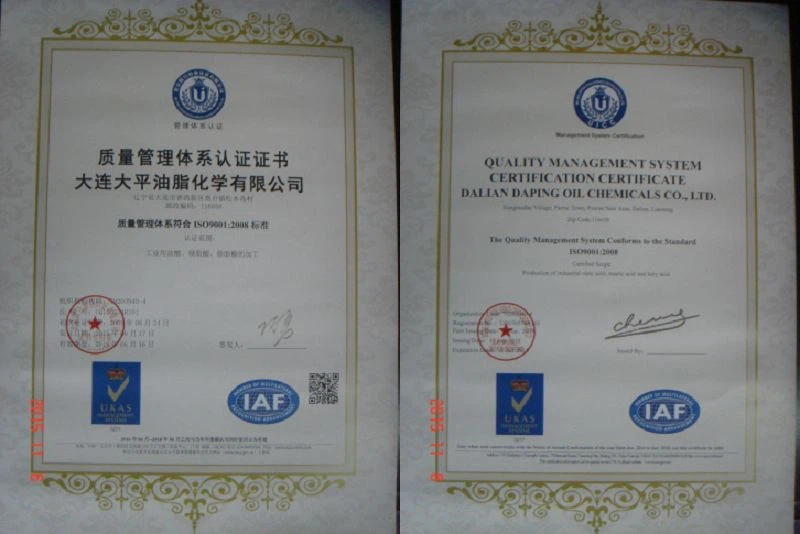
Our Certifications
Our Factory
Our corporation was established in 1988 and it's a large-scale private enterprise specializing in production, processing, research and development of soybean oil chemicals. With a history of 30 years on oil industry from 1988 to 2018, it enjoys great reputation in the industry. With business increase of the enterprise and its increase in market share it prossesses, we established a new morden garden-type factory at Dalian chemical garden with the investment capital of RMB100,000,000.- in 2007. The new factory covers are area of 77,000m2 and has almost 200 employees.

Ultimate FAQ Guide to Refined Soya Fatty Acid
We're one of the most professional refined soya fatty acid manufacturers in China. If you're interested in refined soya fatty acid, please be free to check price and quotation with us. Also, free sample is available.
fatty acid exporters, fatty acid in sales, cosmetic fatty acid-
![Feeder Grade Palmitic Acid]() Feeder Grade Palmitic AcidPalmitic acid is a high-energy substance that undergoes β-oxidation in animals to release substantial energy. It servesread more
Feeder Grade Palmitic AcidPalmitic acid is a high-energy substance that undergoes β-oxidation in animals to release substantial energy. It servesread more -
![Anti Gel For Diesel Fuel]() Anti Gel For Diesel FuelDescription:Vegetable BaseAppearance:LiquidProduct Summery:FAC producted through hydrolysis, distillation and otherread more
Anti Gel For Diesel FuelDescription:Vegetable BaseAppearance:LiquidProduct Summery:FAC producted through hydrolysis, distillation and otherread more -
![Best Anti Gel Diesel Fuel Additive]() Best Anti Gel Diesel Fuel AdditiveDescription:Vegetable BaseAppearance:LiquidProduct Summery:FAC producted through hydrolysis, distillation and otherread more
Best Anti Gel Diesel Fuel AdditiveDescription:Vegetable BaseAppearance:LiquidProduct Summery:FAC producted through hydrolysis, distillation and otherread more -
![Anti Gel Diesel Additive]() Anti Gel Diesel AdditiveDescription:Vegetable BaseAppearance:LiquidProduct Summery:FAC producted through hydrolysis, distillation and otherread more
Anti Gel Diesel AdditiveDescription:Vegetable BaseAppearance:LiquidProduct Summery:FAC producted through hydrolysis, distillation and otherread more -
![Diesel Fuel Supplement Cetane Boost]() Diesel Fuel Supplement Cetane BoostDescription:Vegetable BaseAppearance:LiquidProduct Summery:FAC producted through hydrolysis, distillation and otherread more
Diesel Fuel Supplement Cetane BoostDescription:Vegetable BaseAppearance:LiquidProduct Summery:FAC producted through hydrolysis, distillation and otherread more -
![Hot Shots Diesel Anti Gel]() Hot Shots Diesel Anti GelDescription:Vegetable BaseAppearance:LiquidProduct Summery:FAC producted through hydrolysis, distillation and otherread more
Hot Shots Diesel Anti GelDescription:Vegetable BaseAppearance:LiquidProduct Summery:FAC producted through hydrolysis, distillation and otherread more