-
![Metal Cutting Fluid Raw Materials]() Metal Cutting Fluid Raw MaterialsDescription: Vegetable BaseAppearance: Liquid/Semi-SolidApplications: FAC is produced through hydrolysis, distillation, and other processes based on soybean oil. Suitable for dimmer acid, alkyd resin, surfactant, synthetic detergent, andread more
Metal Cutting Fluid Raw MaterialsDescription: Vegetable BaseAppearance: Liquid/Semi-SolidApplications: FAC is produced through hydrolysis, distillation, and other processes based on soybean oil. Suitable for dimmer acid, alkyd resin, surfactant, synthetic detergent, andread more -
![Raw Materials Of Dimer Acid Resin]() Raw Materials Of Dimer Acid ResinDescription: Vegetable BaseAppearance: Liquid/Semi-SolidApplications: FAC is produced through hydrolysis, distillation, and other processes based on soybean oil. Suitable for dimmer acid, alkyd resin, surfactant, synthetic detergent, andread more
Raw Materials Of Dimer Acid ResinDescription: Vegetable BaseAppearance: Liquid/Semi-SolidApplications: FAC is produced through hydrolysis, distillation, and other processes based on soybean oil. Suitable for dimmer acid, alkyd resin, surfactant, synthetic detergent, andread more -
![Alkyd Resin Raw Materials]() Alkyd Resin Raw MaterialsDescription: Vegetable BaseAppearance: Liquid/Semi-SolidApplications: FAC is produced through hydrolysis, distillation, and other processes based on soybean oil. Suitable for dimmer acid, alkyd resin, surfactant, synthetic detergent, andread more
Alkyd Resin Raw MaterialsDescription: Vegetable BaseAppearance: Liquid/Semi-SolidApplications: FAC is produced through hydrolysis, distillation, and other processes based on soybean oil. Suitable for dimmer acid, alkyd resin, surfactant, synthetic detergent, andread more -
![Distilled Tallow Fatty Acid]() Distilled Tallow Fatty AcidDescription: Vegetable BaseAppearance: Liquid/Semi-SolidApplications: FAC is produced through hydrolysis, distillation, and other processes based on soybean oil. Suitable for dimmer acid, alkyd resin, surfactant, synthetic detergent, andread more
Distilled Tallow Fatty AcidDescription: Vegetable BaseAppearance: Liquid/Semi-SolidApplications: FAC is produced through hydrolysis, distillation, and other processes based on soybean oil. Suitable for dimmer acid, alkyd resin, surfactant, synthetic detergent, andread more -
![Coconut Fatty Acid Suppliers]() Coconut Fatty Acid SuppliersDescription: Vegetable BaseAppearance: Liquid/Semi-SolidApplications: FAC is produced through hydrolysis, distillation, and other processes based on soybean oil. Suitable for dimmer acid, alkyd resin, surfactant, synthetic detergent, andread more
Coconut Fatty Acid SuppliersDescription: Vegetable BaseAppearance: Liquid/Semi-SolidApplications: FAC is produced through hydrolysis, distillation, and other processes based on soybean oil. Suitable for dimmer acid, alkyd resin, surfactant, synthetic detergent, andread more -
![Rice Bran Fatty Acid Manufacturers]() Rice Bran Fatty Acid ManufacturersDescription: Vegetable BaseAppearance: Liquid/Semi-SolidApplications: FAC is produced through hydrolysis, distillation, and other processes based on soybean oil. Suitable for dimmer acid, alkyd resin, surfactant, synthetic detergent, andread more
Rice Bran Fatty Acid ManufacturersDescription: Vegetable BaseAppearance: Liquid/Semi-SolidApplications: FAC is produced through hydrolysis, distillation, and other processes based on soybean oil. Suitable for dimmer acid, alkyd resin, surfactant, synthetic detergent, andread more -
![Palm Fatty Acid Price]() Palm Fatty Acid PriceDescription: Vegetable BaseAppearance: Liquid/Semi-SolidApplications: FAC is produced through hydrolysis, distillation, and other processes based on soybean oil. Suitable for dimmer acid, alkyd resin, surfactant, synthetic detergent, andread more
Palm Fatty Acid PriceDescription: Vegetable BaseAppearance: Liquid/Semi-SolidApplications: FAC is produced through hydrolysis, distillation, and other processes based on soybean oil. Suitable for dimmer acid, alkyd resin, surfactant, synthetic detergent, andread more -
![Hydrolyzed Fatty Acids]() Hydrolyzed Fatty AcidsDescription: Vegetable BaseAppearance: Liquid/Semi-SolidApplications: FAC is produced through hydrolysis, distillation, and other processes based on soybean oil. Suitable for dimmer acid, alkyd resin, surfactant, synthetic detergent, andread more
Hydrolyzed Fatty AcidsDescription: Vegetable BaseAppearance: Liquid/Semi-SolidApplications: FAC is produced through hydrolysis, distillation, and other processes based on soybean oil. Suitable for dimmer acid, alkyd resin, surfactant, synthetic detergent, andread more -
![Soybean Oil Acid]() Soybean Oil AcidDescription: Vegetable BaseAppearance: Liquid/Semi-SolidApplications: FAC is produced through hydrolysis, distillation, and other processes based on soybean oil. Suitable for dimmer acid, alkyd resin, surfactant, synthetic detergent, andread more
Soybean Oil AcidDescription: Vegetable BaseAppearance: Liquid/Semi-SolidApplications: FAC is produced through hydrolysis, distillation, and other processes based on soybean oil. Suitable for dimmer acid, alkyd resin, surfactant, synthetic detergent, andread more -
![Soybean Oleic Acid]() Soybean Oleic AcidDescription: Vegetable BaseAppearance: Liquid/Semi-SolidApplications: FAC is produced through hydrolysis, distillation, and other processes based on soybean oil. Suitable for dimmer acid, alkyd resin, surfactant, synthetic detergent, andread more
Soybean Oleic AcidDescription: Vegetable BaseAppearance: Liquid/Semi-SolidApplications: FAC is produced through hydrolysis, distillation, and other processes based on soybean oil. Suitable for dimmer acid, alkyd resin, surfactant, synthetic detergent, andread more -
![Soybean Oil Linoleic Acid]() Soybean Oil Linoleic AcidDescription: Vegetable BaseAppearance: Liquid/Semi-SolidApplications: FAC is produced through hydrolysis, distillation, and other processes based on soybean oil. Suitable for dimmer acid, alkyd resin, surfactant, synthetic detergent, andread more
Soybean Oil Linoleic AcidDescription: Vegetable BaseAppearance: Liquid/Semi-SolidApplications: FAC is produced through hydrolysis, distillation, and other processes based on soybean oil. Suitable for dimmer acid, alkyd resin, surfactant, synthetic detergent, andread more -
![Soybean Fatty Acid]() Soybean Fatty AcidDescription: Vegetable BaseAppearance: Liquid/Semi-SolidApplications: FAC is produced through hydrolysis, distillation, and other processes based on soybean oil. Suitable for dimmer acid, alkyd resin, surfactant, synthetic detergent, andread more
Soybean Fatty AcidDescription: Vegetable BaseAppearance: Liquid/Semi-SolidApplications: FAC is produced through hydrolysis, distillation, and other processes based on soybean oil. Suitable for dimmer acid, alkyd resin, surfactant, synthetic detergent, andread more


Rich Experience
Our corporation was established in 1988 and it's a large-scale private enterprise specializing in production, processing, research and development of soybean oil chemicals. With a history of 30 years on oil industry from 1988 to 2018, it enjoys great reputation in the industry.
Reliable Product Quality
Our corporation takes soybean oil production or tallow production as the raw materials, adpops the most advanced equipments and special rectification techniques to to produce genuine oleic acid and high quality streaic acid etc.
Wide Range Of Applications
Our production have been widely applied to chemical and medical industries, etc which are the indispensable basic materials.
Reliable Customer Support
Our team provides reliable customer support, and we take pride in our prompt response and resolution time.resolution time.
Fatty acids can be defined as carboxylic acids with long aliphatic chains that can either be branched or unbranched. The fatty acids that occur naturally, possess carbon atoms in even numbers and are usually unbranched. Fatty acids are major components of lipids; they exist in three main forms of esters: phospholipids, triglycerides and cholesteryl esters.
Advantages of Fatty Acid
Eye Health
Good fats promote healthy eye development in children and prevent macular degeneration in adults. Fatty acids promote drainage of intraocular fluid and decrease the chances of glaucoma.
Strong Joints
Certain fats have anti-inflammatory properties. Increasing blood flow throughout the body reduces pain and swelling in the joints. Omega-3s are often part of the treatment plan for rheumatoid arthritis.
Healthy Heart
The anti-inflammatory properties of healthy fats benefit the heart by reducing blood pressure. Elevated blood pressure increases the risk of cardiovascular disease and can lead to heart failure.
Regulating Blood Sugar
Fats can decrease insulin resistance and triglyceride levels in people with diabetes. Fish oil is reported to decrease the risk of developing type 2 diabetes.
Even and Odd Chain Fatty Acids
Most naturally occuring fatty acids have an even number of carbons in their aliphatic chain. Example: oleic acid (18), stearic acid (18). However, some fatty acids also have an odd number of carbons in their chain. They are known as odd-chain fatty acids (OCFA). Example: heptadecanoic and pentadecanoic acid that are found in dairy products. The biosynthesis of odd chain fatty acids is a little more complex than the even chain fatty acids.
Saturated and Unsaturated Fatty Acids
The acids that have no double bond (C=C) in their aliphatic chain are known as saturated fatty acids. The chemical formula of saturated fatty acids can be written as CH3(CH2)nCOOH. Below is a table of common saturated fatty acids with their formula. The unsaturated fatty acids possess at least one double bond in their aliphatic chain. The double bond in the molecule can generate two isomers for unsaturated fatty acids: cis and trans configurations.
Length of Fatty Acids
Fatty acids with aliphatic chains of five or lesser carbons are called short-chain fatty acids (SCFA). Example: butyric acid
Fatty acids with aliphatic chains of 6 to 12 carbons are called medium-chain fatty acids (MCFA). Example: capric acid
Fatty acids with aliphatic chains of 13 to 21 carbons are called long-chain fatty acids (LCFA). Example: oleic acid
Fatty acids with aliphatic chains of 22 or more carbons are called very long chain fatty acids (VLCFA). Example: lignoceric acid
● They are used in the production of various food products.
● They are used in the manufacture of soaps, detergents, and cosmetics.
● Soaps are fatty acid salts of sodium and potassium. Some skincare products contain fatty acids, which can help maintain the appearance and function of healthy skin.
● Dietary supplements containing fatty acids, particularly omega-3 fatty acids, are also widely available.
● Fatty acids are also converted to fatty alcohols and fatty amines via their methyl esters, which are used in the production of surfactants, detergents, and lubricants.
● Fatty acids can act as emulsifiers, texturizing agents, wetting agents, anti-foam agents, and stabilizing agents.
Physiology of Fatty Acids

Fatty acids are widely spread through the whole human organism, and they can be found under different forms: free circulating fatty acids or esterified, taking form of:
● Triacylglycerols (or triglycerides), when esterified with glycerol,
● Phospholipids, when esterified with phosphoric acid,
● Glycolipids, when combined with glucose or other saccharides,
● Sphingolipids, etc.
The great importance of fatty acids resides in the fact that they are main constituents of the human cell. The type of fatty acid, saturated or unsaturated, long-chained or short-chained can influence the physiology of the cell, as it will be described below.
How Do You Analyze Fatty Acids?
Fatty acids are commonly analyzed by gas chromatography (GC) after conversion to fatty acid methyl esters (FAMEs) which are more easily separated and quantified than either triglycerides or free fatty acids. In most methods the fat is saponified, which liberates the fatty acids from triglycerides, phospholipids, etc.—producing free acids. The free acids are trans-esterified to form fatty acid methyl esters. Matrices that are not pure fats and oils require an extraction step to liberate the fat for analysis. Most solid samples are hydrolyzed by strong acid and/or akali, then extracted with organic solvents. In order to accurately quantify the fatty acid content of the sample as a weight percentage of sample, a synthetic fatty acid (typically C13:0, C19:0, C21:0 or C23:0) is added to the sample prior to extraction as an internal standard. The use of the internal standard compensates for variability in both the preparation and analysis of the sample. The fatty acid methyl esters are then separated on the GC and quantified using a flame ionization detector (FID). Separations are performed with wax type capillary columns when only basic chain length and saturation are needed. In order to quantify cis versus trans isomerization specialized, highly-polar capillary columns are used. The FID burns the FAMEs producing ions generating an electrical current which is measured and plotted as the response in the chromatogram.
Acidity
Fatty acids have similar acidities. As the chain length of a fatty acid increases, their solubility in water decreases, posing no or little effect on the pH of the aqueous solution. Example: Nonanoic acid (C9) has a pKa of 4.96 whereas acetic acid (C2) has a pKa of 4.76.
Hydrogenation
Unsaturated fatty acids are prone to get rancid (autoxidation or hydrolysis of fats when exposed to air). Therefore the unsaturated fatty acids undergo hydrogenation to minimise this problem.
Autoxidation
Unsaturated fatty acids undergo a chemical change in the presence of air and trace metals called autoxidation. Treatment with chelating agents can prevent this action as they remove the metal catalysts.
Ozonolysis
Unsaturated fatty acids have high chances to get degraded by ozone.
Circulation of Fatty Acids
SCFA and MCFA are directly absorbed in our blood by the intestinal capillaries and travel via the hepatic portal vein, similar to other absorbed nutrients. LCFA, however, is not absorbed directly into the blood. They are absorbed in the villi of the intestine to form triglycerides. The triglycerides get coated with cholesterol and proteins to form chylomicrons. The chylomicrons are transported to a location near the heart via the lymphatic duct where they are either stored or broken down for energy.
Fatty acids are broken down via beta-oxidation and citric acid cycle in mitochondria into CO2 and water. After oxidative phosphorylation they release energy in the form of ATP.
Steps Involved in Fatty Acid Synthesis
The first and foremost controlling step involved in the fatty acid biosynthesis is the production of malonyl-CoA.
In the initial reaction, acetyl-CoA is carboxylated to malonyl-CoA in the presence of ATP and acetyl-CoA carboxylase, which calls for bicarbonate as a source of CO2. This enzyme is crucial for controlling the synthesis of fatty acids.
The fatty acid synthase (FAS) enzyme complex produces fatty acids following the synthesis of malonyl-CoA. This multienzyme polypeptide complex, which includes the acyl carrier protein (ACP), links the individual enzymes necessary for fatty acid synthesis.
The multienzyme complex includes 4′-phosphopantetheine, a form of the vitamin pantothenic acid.
Initially, a cysteine (-SH group) joins with an acetyl-CoA priming molecule, while malonyl-CoA joins with the -SH group next to it on the 4′-phosphopantetheine of ACP of the other monomer.
Malonyl acetyl transacylase catalyses these reactions, resulting in the formation of the acetyl (acyl)-malonyl enzyme.
With the help of 3-ketoacyl synthase, the acetyl group attacks the methylene group of the malonyl residue and releases CO2 to create the 3-ketoacyl enzyme, which then releases the cysteine -SH group.
Decarboxylation enables the reaction to proceed to completion, moving the entire chain of reactions forward.
To create the corresponding saturated acyl-enzyme, the 3-ketoacyl group is first reduced, then dehydrated and reduced once more.
The saturated acyl residue is transferred to the free cysteine -SH group when a new malonyl-CoA molecule joins with the -SH of 4′-phosphopantetheine.
Biomedical Significance of Fatty Acid Synthesis
The entire synthesis of palmitate from acetyl-CoA in the cytosol is accomplished by an extramitochondrial system. This extramitochondrial system produces fatty acids. Most mammals use glucose as their main substrate for lipogenesis, but ruminants use acetate as their main dietary source of fuel. Type 1 (insulin-dependent) diabetes mellitus inhibits lipogenesis, and changes in the process’s activity have an impact on the type and extent of obesity. The phospholipids in the cell membrane play a crucial role in maintaining the fluidity of the membrane. It is thought that a diet with a high polyunsaturated fatty acid to the saturated fatty acid ratio (P:S ratio) will help prevent coronary heart disease.
Production of Fatty Acids
Industrial Production
Fatty acids are typically produced on an industrial scale by hydrolyzing triglycerides and removing glycerol. Another source is phospholipids. Hydrocarboxylation of alkenes is another method to synthesize some fatty acids.
Certain industrial processes for topical skin creams produce hyper-oxygenated fatty acids. This process involves introducing or saturating peroxides into fatty acid esters in the presence of ultraviolet light and bubbling gaseous oxygen at controlled temperatures.
Production in Animals
During lactation, fatty acids are primarily formed from carbohydrates in the liver, adipose tissue, and the mammary glands of animals.
What Are the Functions of Fatty Acids?
One function includes their role in signal-transduction pathways. They act as secondary messengers and modulators especially of signals induced at the cell membrane level. For example, fatty acids have a significant role in the generation of eicosanoids. Eicosanoids are composed of 20-carbon polyunsaturated fatty acids which help form molecules involved in chemotaxis, growth factors, and platelet aggregation. Eicosanoids are formed through different enzyme pathways (e.g. lipoxygenase, cyclooxygenase, cytochrome P450). Arachidonic acid is typically the substrate for eicosanoid synthesis.
Another function of fatty acids is their use as a source of cellular energy. Fatty acids are uptaken by cells through acid-binding proteins (FABPs). Free fatty acids are activated by acyl-CoA and transported to the mitochondria or peroxisomes to be generated into ATP and heat. When utilized as a source of energy, fatty acids are released in the digestion of triglycerides and broken down in a series of reactions to produce 2 carbon molecules of acetyl-CoA. Another function of fatty acids is their use as energy stores. The glycerol generated by lipolysis functions as a source of carbon for gluconeogenesis (in the liver), as fats in the body essentially function as stored energy for later use. Fatty acids provide six times the amount of usable energy than glucose does.
An additional function of fatty acids is their role in protein modification. For example, the acylation of proteins, which involves primarily saturated fatty acids, is vital for the folding, anchoring and function of various proteins. Acylation of proteins also helps to modulate intracellular trafficking, protein-protein and protein-lipid interactions, and subcellular localization. Fatty acids also indirectly influence gene expression via their effect on the protein kinase C, lipoxygenase, or cyclooxygenase pathways. Another function of fatty acids is that they are components of lipids, which may be composed solely of fatty acids or contain alcohol or phosphate molecules. Triglycerides, steroids, and phospholipids are common examples of lipids.
Where to Find Fatty Acids
Saturated fatty acids are primarily found in red meats such as beef and pork, full-fat dairy products such as milk, yogurt, and cheese, butter, lard, shortening, palm, and coconut oils. Processed foods are also a source of saturated fat1.
Monounsaturated fatty acids are highest in peanuts, avocadoes, non-hydrogenated margarine, and oils such as olive, canola, peanut, sunflower, and safflower1.
Omega-3 polyunsaturated fatty acids can be found in flax, chia, and hemp seeds, walnuts, canola oil, and fatty fish such as salmon, herring, mackerel, and trout1.
Omega-6 polyunsaturated fatty acids are found most abundantly in vegetable oils such as soybean, sunflower, and safflower, as well as in nuts, seeds, grains and non-hydrogenated margarine1.
Being mindful of having a balanced and varied diet can help to ensure you are including sources of both saturated and unsaturated fats while emphasizing more whole foods that offer omega-3 and omega-6 fatty acids.
As a quick recap of the different sources of omega-3 fatty acids, there are three different types: ALA, EPA, and DHA. ALA is primarily found in plant foods, such as walnuts, flax, hemp, and chia seeds, soybeans, and all of the above’s oils. EPA and DHA are higher in animal foods, notably fatty fish, as well as in kelp and seaweed. Having sources of all three of these fatty acids is important for optimizing our health.
Tips for Increasing Your Fatty Acids


Aim to include 3-4 oz of fatty fish, such as salmon, herring, mackerel, or trout, at least 2 times per week.
If you do not eat fish, try to include seaweed or kelp into your routine to increase your EPA and DHA.
An EPA/DHA supplement may be recommended if you are unable to consume fatty fish as outlined, if this is the case the general guideline is to obtain one with 500 mg EPA and DHA combined7.
Optimize your meals with omega-3 fatty acids by opting for flaxseed, walnut, or canola oil for cooking or salad dressings.
Include omega-3 fatty acids in your snacks, oatmeal, salads, or smoothies by adding walnuts, pecans, flax seeds, hemp hearts, and/or chia seeds.
If you eat eggs, choose omega-3 fortified to boost your fatty acids in the morning or baking.
In general, it is recommended that 20-35% of our daily calories come from fat. Therefore, the recommended intake for everyone is variable. Each gram of fat equates to 9 calories, therefore for the average person who is consuming 2000 calories, it would be recommended to eat between 45-75 grams or 400-700 calories from fat daily on average.
While the recommendation for dietary fat intake is variable, there are more specific recommendations around the essential fatty acids, omega-3 and omega-6. In our culture, it not uncommon to have ample omega-6 in our diet, while omega-3 can fall to the wayside and end up being under-consumed. When we over-consume omega-6 and under-consume omega-3 we are shifting the optimal ratio of these fats and reducing the protective effects that they can have on our health.
Research4,5 suggests that the ideal omega-6 to omega-3 ratio in our diet is between 1:1 to 4:1. Despite this, it is estimated that on average the North American diet ratio of essential fatty acids is closer to 10:1-20:14! This is likely because that processed foods have increased, elevating the amount of omega-6’s being consumed from vegetable oils. This skewed ratio is thought to be tied to the increased prevalence of inflammatory diseases such as rheumatoid arthritis, irritable bowel disease, and cancers, as well as fatty liver and cardiovascular disease4.
How to Take Omega-3 Fatty Acids
Omega-3 fatty acid supplements are usually found in gel-cap form, but they are also available in liquid and gummy form. Most DHA- and EPA-based supplements are derived from fish or krill. However, there are plant-based DHA and EPA supplements that are appropriate for people following plant-based or vegan diets. Those who want to take a plant-based omega-3 supplement should consider algal oil-based products. Algal oil contains DHA and EPA, and studies show it's similar in effectiveness to fish-based products in raising levels of these omega-3 fatty acids in the body. Omega-3 supplements can be taken at any time of day. Some research indicates omega-3s are better absorbed when taken with a meal containing fat, so it may be beneficial to take omega-3 supplements with food. Taking omega-3 supplements with meals may also help reduce the chances of side effects like nausea and a fishy aftertaste.
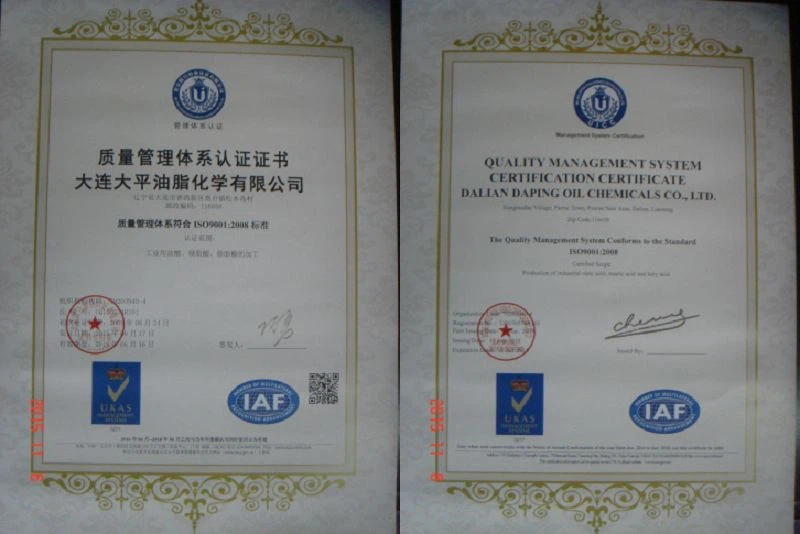
Our Certifications
Our Factory
Our corporation was established in 1988 and it's a large-scale private enterprise specializing in production, processing, research and development of soybean oil chemicals. With a history of 30 years on oil industry from 1988 to 2018, it enjoys great reputation in the industry. With business increase of the enterprise and its increase in market share it prossesses, we established a new morden garden-type factory at Dalian chemical garden with the investment capital of RMB100,000,000.- in 2007. The new factory covers are area of 77,000m2 and has almost 200 employees.

Ultimate FAQ Guide to Fatty Acid
We're one of the most professional fatty acid manufacturers in China. If you're interested in fatty acid, please be free to check price and quotation with us. Also, free sample is available.
stearic acid, fatty acid production, fatty acid in coatings-
![Feeder Grade Palmitic Acid]() Feeder Grade Palmitic AcidPalmitic acid is a high-energy substance that undergoes β-oxidation in animals to release substantial energy. It servesread more
Feeder Grade Palmitic AcidPalmitic acid is a high-energy substance that undergoes β-oxidation in animals to release substantial energy. It servesread more -
![Anti Gel For Diesel Fuel]() Anti Gel For Diesel FuelDescription:Vegetable BaseAppearance:LiquidProduct Summery:FAC producted through hydrolysis, distillation and otherread more
Anti Gel For Diesel FuelDescription:Vegetable BaseAppearance:LiquidProduct Summery:FAC producted through hydrolysis, distillation and otherread more -
![Best Anti Gel Diesel Fuel Additive]() Best Anti Gel Diesel Fuel AdditiveDescription:Vegetable BaseAppearance:LiquidProduct Summery:FAC producted through hydrolysis, distillation and otherread more
Best Anti Gel Diesel Fuel AdditiveDescription:Vegetable BaseAppearance:LiquidProduct Summery:FAC producted through hydrolysis, distillation and otherread more -
![Anti Gel Diesel Additive]() Anti Gel Diesel AdditiveDescription:Vegetable BaseAppearance:LiquidProduct Summery:FAC producted through hydrolysis, distillation and otherread more
Anti Gel Diesel AdditiveDescription:Vegetable BaseAppearance:LiquidProduct Summery:FAC producted through hydrolysis, distillation and otherread more -
![Diesel Fuel Supplement Cetane Boost]() Diesel Fuel Supplement Cetane BoostDescription:Vegetable BaseAppearance:LiquidProduct Summery:FAC producted through hydrolysis, distillation and otherread more
Diesel Fuel Supplement Cetane BoostDescription:Vegetable BaseAppearance:LiquidProduct Summery:FAC producted through hydrolysis, distillation and otherread more -
![Hot Shots Diesel Anti Gel]() Hot Shots Diesel Anti GelDescription:Vegetable BaseAppearance:LiquidProduct Summery:FAC producted through hydrolysis, distillation and otherread more
Hot Shots Diesel Anti GelDescription:Vegetable BaseAppearance:LiquidProduct Summery:FAC producted through hydrolysis, distillation and otherread more