-
![Raw Materials Of Dimer Acid Resin]() Raw Materials Of Dimer Acid ResinDescription: Vegetable BaseAppearance: Liquid/Semi-SolidApplications: FAC is produced through hydrolysis, distillation, and other processes based on soybean oil. Suitable for dimmer acid, alkyd resin, surfactant, synthetic detergent, andread more
Raw Materials Of Dimer Acid ResinDescription: Vegetable BaseAppearance: Liquid/Semi-SolidApplications: FAC is produced through hydrolysis, distillation, and other processes based on soybean oil. Suitable for dimmer acid, alkyd resin, surfactant, synthetic detergent, andread more -
![Fatty Acid Oil Price/refined Soya Fatty Acid]() Fatty Acid Oil Price/refined Soya Fatty AcidClassification:Carboxylic AcidCAS No.:112-80-1Other Names:IV 140 Oleic AcidPlace of Origin:Liaoning, ChinaGrade Standard:Industrial GradePurity:99.7%Appearance:liquid, Liquid 25℃ConformApplication:dimmer acid, alkyd resin,syntheticread more
Fatty Acid Oil Price/refined Soya Fatty AcidClassification:Carboxylic AcidCAS No.:112-80-1Other Names:IV 140 Oleic AcidPlace of Origin:Liaoning, ChinaGrade Standard:Industrial GradePurity:99.7%Appearance:liquid, Liquid 25℃ConformApplication:dimmer acid, alkyd resin,syntheticread more -
![Oleic Acid Distilled Fatty Acid Manufacture]() Oleic Acid Distilled Fatty Acid ManufactureClassification: Carboxylic Acid CAS No.: 112-80-1 Other Names: distilled soya fatty acid Place of Origin: Liaoning, China Grade Standard: Industrial Grade Purity: 99.7% Appearance: Liquid 25℃Conform, Liquid 25℃Conform Application: alkydread more
Oleic Acid Distilled Fatty Acid ManufactureClassification: Carboxylic Acid CAS No.: 112-80-1 Other Names: distilled soya fatty acid Place of Origin: Liaoning, China Grade Standard: Industrial Grade Purity: 99.7% Appearance: Liquid 25℃Conform, Liquid 25℃Conform Application: alkydread more -
![Refined Oleic Acid Liquid Brown Origin Catalyst Mass Mol Grade Names]() Refined Oleic Acid Liquid Brown Origin Catalyst Mass Mol ...Description: Vegetable Base Appearance: Liquid/Semi-Solid Applications: FAC is produced through hydrolysis, distillation, and other processes based on soybean oil. Suitable for dimmer acid, alkyd resin, surfactant, synthetic detergent, andread more
Refined Oleic Acid Liquid Brown Origin Catalyst Mass Mol ...Description: Vegetable Base Appearance: Liquid/Semi-Solid Applications: FAC is produced through hydrolysis, distillation, and other processes based on soybean oil. Suitable for dimmer acid, alkyd resin, surfactant, synthetic detergent, andread more -
![C18:0 C18:1 C18:2soya Bean Fatty Acid]() C18:0 C18:1 C18:2soya Bean Fatty AcidDescription:Vegetable BaseAppearance:LiquidApplications:FAC producted through hydrolysis, distillation and other processes based on soyabean oil. Suitable for dimmer acid, alkyd resin, surfactant, synthetic detergent and so on.Packing:read more
C18:0 C18:1 C18:2soya Bean Fatty AcidDescription:Vegetable BaseAppearance:LiquidApplications:FAC producted through hydrolysis, distillation and other processes based on soyabean oil. Suitable for dimmer acid, alkyd resin, surfactant, synthetic detergent and so on.Packing:read more -
![Coating/paint Dimer Acid/soyabean Fatty Acid]() Coating/paint Dimer Acid/soyabean Fatty AcidDescription:Vegetable BaseAppearance:Liquid/Semi-SolidApplications:FAC producted through hydrolysis, distillation and other processes based on soyabean oil. Suitable for dimmer acid, alkyd resin, surfactant, synthetic detergent and soread more
Coating/paint Dimer Acid/soyabean Fatty AcidDescription:Vegetable BaseAppearance:Liquid/Semi-SolidApplications:FAC producted through hydrolysis, distillation and other processes based on soyabean oil. Suitable for dimmer acid, alkyd resin, surfactant, synthetic detergent and soread more -
![Aydrolyzation Distilled Organic Oleic Acid(IV140) Vegetable Base CAS 112-80-1 China Supplier]() Aydrolyzation Distilled Organic Oleic Acid(IV140) Vegetab...Classification:Carboxylic AcidCAS No.:112-80-1Other Names:distilled soya fatty acidPlace of Origin:Liaoning, ChinaGrade Standard:Industrial GradePurity:99.7%Appearance:Liquid 25℃Conform, Liquid 25℃ConformApplication:alkyd resin,surfactant,read more
Aydrolyzation Distilled Organic Oleic Acid(IV140) Vegetab...Classification:Carboxylic AcidCAS No.:112-80-1Other Names:distilled soya fatty acidPlace of Origin:Liaoning, ChinaGrade Standard:Industrial GradePurity:99.7%Appearance:Liquid 25℃Conform, Liquid 25℃ConformApplication:alkyd resin,surfactant,read more -
![Print Oil Raw Material Soybean Fatty Acid]() Print Oil Raw Material Soybean Fatty AcidDescription:Vegetable BaseAppearance:Liquid/Semi-SolidApplications:FAC producted through hydrolysis, distillation and other processes based on soyabean oil. Suitable for dimmer acid, alkyd resin, surfactant, synthetic detergent and soread more
Print Oil Raw Material Soybean Fatty AcidDescription:Vegetable BaseAppearance:Liquid/Semi-SolidApplications:FAC producted through hydrolysis, distillation and other processes based on soyabean oil. Suitable for dimmer acid, alkyd resin, surfactant, synthetic detergent and soread more -
![Add To CompareShare Cheapest Soya Bean Fatty Acid/manufacture/supplier/china]() Add To CompareShare Cheapest Soya Bean Fatty Acid/manufac...Description:Vegetable Base Appearance:Liquid Applications:FAC producted through hydrolysis, distillation and other processes based on soyabean oil. Suitable for dimmer acid, alkyd resin, surfactant, synthetic detergent and so on. Packing:read more
Add To CompareShare Cheapest Soya Bean Fatty Acid/manufac...Description:Vegetable Base Appearance:Liquid Applications:FAC producted through hydrolysis, distillation and other processes based on soyabean oil. Suitable for dimmer acid, alkyd resin, surfactant, synthetic detergent and so on. Packing:read more -
![Raw Material For Mining Resource Service/soya Fatty Acid]() Raw Material For Mining Resource Service/soya Fatty AcidDescription:Vegetable BaseAppearance:Liquid/Semi-SolidApplications:FAC producted through hydrolysis, distillation and other processes based on soyabean oil. Suitable for dimmer acid, alkyd resin, surfactant, synthetic detergent and soread more
Raw Material For Mining Resource Service/soya Fatty AcidDescription:Vegetable BaseAppearance:Liquid/Semi-SolidApplications:FAC producted through hydrolysis, distillation and other processes based on soyabean oil. Suitable for dimmer acid, alkyd resin, surfactant, synthetic detergent and soread more -
![SOFA For Beneficiation Reagent China Supplier]() SOFA For Beneficiation Reagent China SupplierClassification:Carboxylic AcidCAS No.:112-80-1Other Names:animal oil basePlace of Origin:Liaoning, ChinaGrade Standard:Industrial GradePurity:99.7%Appearance:liquid, 25℃ Semi solid ConformApplication:soap bar,SBR,Sodium soapBrandread more
SOFA For Beneficiation Reagent China SupplierClassification:Carboxylic AcidCAS No.:112-80-1Other Names:animal oil basePlace of Origin:Liaoning, ChinaGrade Standard:Industrial GradePurity:99.7%Appearance:liquid, 25℃ Semi solid ConformApplication:soap bar,SBR,Sodium soapBrandread more -
![Hydrolyzation Distilled Soya Fatty Acid(SOFA)IV120-147 For Alkyd Resin China Supplier]() Hydrolyzation Distilled Soya Fatty Acid(SOFA)IV120-147 Fo...Classification:Carboxylic AcidCAS No.:112-80-1Other Names:fatty acidPlace of Origin:ChinaGrade Standard:Industrial GradePurity:99.7%Appearance:Liquid 25℃ Conform, Liquid 25℃Application:alkyd resin,surfactant, synthetic detergentBrandread more
Hydrolyzation Distilled Soya Fatty Acid(SOFA)IV120-147 Fo...Classification:Carboxylic AcidCAS No.:112-80-1Other Names:fatty acidPlace of Origin:ChinaGrade Standard:Industrial GradePurity:99.7%Appearance:Liquid 25℃ Conform, Liquid 25℃Application:alkyd resin,surfactant, synthetic detergentBrandread more


Rich Experience
Our corporation was established in 1988 and it's a large-scale private enterprise specializing in production, processing, research and development of soybean oil chemicals. With a history of 30 years on oil industry from 1988 to 2018, it enjoys great reputation in the industry.
Reliable Product Quality
Our corporation takes soybean oil production or tallow production as the raw materials, adpops the most advanced equipments and special rectification techniques to to produce genuine oleic acid and high quality streaic acid etc.
Wide Range Of Applications
Our production have been widely applied to chemical and medical industries, etc which are the indispensable basic materials.
Reliable Customer Support
Our team provides reliable customer support, and we take pride in our prompt response and resolution time.resolution time.
Refined oleic acid is a highly purified oleic acid suitable for use in topical, oral and nasal applications. It acts as a solubilizer, emulsifying agent and transdermal penetration enhancer to improve the bioavailability of poorly water-soluble drugs. The exclusive Super Refining process removes polar impurities without changing the chemical composition of the excipient. This reduces the potential for adverse interactions between the excipient and the API, improving the stability and effectiveness of the active ingredient. Refined oleic acid features improved oxidative stability and lower irritation potential compared to standard pharmaceutical oleic acid.
Reduces Blood Pressure
One of the most well-known olive oil benefits is its ability to boost cardiovascular health by reducing blood pressure. Studies demonstrate that hypotensive effects of olive oil is caused by its high oleic acid content.
Lowers Cholesterol
If you are looking to add cholesterol-lowering foods to your diet, add in nuts and oils that are high in oleic acid. Scientists have found that when compared with other kinds of high healthy-fat diets, an oleic-rich diet has equal cholesterol-lowing effects, while also maintaining HDL cholesterol levels and reducing triglycerides.
Promotes Fat Burning
Eating healthy fats is a key element in losing weight and keeping it off. For one thing, fats like oleic acid help to control excess insulin, which is important for weight loss. Plus, adding healthy fats into your diet helps to reduce hunger, cravings and overeating because they are satiating and make you feel full for a longer period of time.
Helps Prevent Type 2 Diabetes
If you are experiencing prediabetes symptoms or you’ve been diagnosed with type 2 diabetes, it may help to add more oleic acid to your diet. Recent research published in Trends in Endocrinology and Metabolism out of Spain suggests that unlike the saturated fat palmitic acid, the monounsaturated fat oleic acid has beneficial effects on insulin sensitivity and type 2 diabetes.
Promotes Brain Function
Research indicates that there’s an inverse relationship between the consumption of monounsaturated fatty acids and cognitive decline. One study published in the American Academy of Neurology’s journal Neurology evaluated an elderly population of Southern Italy with a typical Mediterranean diet that’s high in monounsaturated fatty acids like olive oil.
May Help Prevent Ulcerative Colitis
Along with omega-3 fatty acids, research suggests that oleic acid should also be part of an ulcerative colitis diet. An interesting prospective cohort study involving over 25,000 adult men and women living in the U.K. evaluated the relationship between the ingestion of foods containing oleic acid and the development of ulcerative colitis.
Fights Infections
Did you know that oleic acid and other free fatty acids can help to boost your immune system and fight infections. Animal and lab studies show that they have antibacterial properties and natural protective effects.
Promotes Skin Repair
There’s a reason why olive oil is often used in skin products — it consists mainly of oleic acid, which has anti-inflammatory, antioxidant and wound-healing effects.
Helps Fight Cancer
Oleic acid is an antioxidant that prevents oxidative stress that leads to a number of health conditions, including cancer.
Application of Refined Oleic Acid
Heart Disease
Using cooking oils that provide about 20 grams (1.5 tablespoons) of oleic acid in place of dietary fats with higher amounts of saturated fat might reduce the risk of heart disease. But research is limited.
High Cholesterol
Using cooking oils rich in oleic acid might help lower cholesterol. These oils include olive oil, some sunflower oils, and canola oil.
Bladder Cancer
People with higher blood levels of oleic acid seem to have a lower risk of bladder cancer. But the amount of oleic acid in the blood can be affected by more than just intake from foods.
Breast Cancer
Eating more foods that contain oleic acid doesn't seem to prevent breast cancer. It's unknown if oleic acid supplements can help prevent bladder cancer.
Diabetes
Following a low-fat diet that includes food with oleic acid doesn't seem to lower cholesterol in people with diabetes.
Diarrhea
Taking oleic acid might reduce the number of bowel movements in some people with diarrhea. But more research is needed.
High Blood Pressure
Eating oil high in oleic acid might not help to lower high blood pressure. But more research is needed.
Obesity
Some early research shows that using cooking oil containing oleic acid reduces fat around the abdomen by a small amount in people who are obese. It also seems to help to lower cholesterol in some people who are obese and at risk for heart disease.
Pancreatic Cancer
People who get more oleic acid from their diet may have a lower risk of pancreatic cancer. But not all research agrees.
Refined Oleic Acid vs. Linoleic Acid


The big difference between oleic acid and linoleic acid is that our bodies produce oleic acid, so the need to supplement isn’t as important. In fact, oleic acid is the most abundant fatty acid in nature, and it’s present in most of our cells.
There is no specific recommendation for oleic acid and omega-9 fatty acid intake because these fats are considered non-essential, but research shows that increasing your consumption of omega-9s, perhaps in place of omega-6 fatty acids, can have beneficial effects.
Oleic acid is a monounsaturated omega-9 fatty acid, while linoleic acid is a polyunsaturated omega-6 fatty acid. What’s the difference? Our bodies can’t make polyunsaturated fats, so they are considered “essential” and need to be obtained from the foods we eat. They serve as an important source of energy for the body, but the Western diet typically includes very high amounts of linoleic acid and other omega-6 foods, like refined vegetable oils. Eating too much omega-6 fats can actually increase inflammation within the body, so it’s important to keep an eye on how much you consume.
How is Refined Oleic Acid Produced?
Oleic acid is obtained from various plant and animal sources, primarily through extraction. Oilseeds, such as canola, sunflower, and safflower, are common sources. These oilseeds are crushed and pressed to extract the oil, then refined to separate and purify oleic acid. Oleic acid is present in animal fats, such as tallow and lard. It constitutes 37-56% of chicken and turkey fat and 44-47% of lard. These fats are obtained from animals through rendering processes, which involve heating the fat to separate it from other tissues. The fat is then further processed to extract oleic acid. For example, one method involves subjecting a high oleic (60-80% oleic acid) sunflower seed oil to enzymatic hydrolysis within an aqueous medium at 20-60°C. The mixture is agitated so that the oil-water interface and the acid moieties of the triglycerides are separated. An oleic acid layer can form and separate away from the aqueous medium.
Functions of Refined Oleic Acid in Food and Nutrition
Oleic acid has various uses in food and nutrition due to its beneficial properties. Here are some of its common applications:
| Function | Application |
| Cooking Oil | Oleic acid is a major component of many cooking oils, such as olive oil, canola oil, and sunflower oil. These oils are commonly used for frying, sautéing, and salad dressing. The high oleic acid content in these oils provides a healthy source of monounsaturated fats. |
| Emulsifier & Stabilizer | Oleic acid is used as an emulsifier and stabilizer in various food products, including sauces, dressings, and spreads. Oleic acid as its sodium salt is an emulsifying agent. It helps prevent separation and provides a smooth and creamy texture. It is commonly combined with other co-emulsifiers. |
| Flavor Enhancer | Oleic acid contributes to the flavor of many food products. It adds a mild, fatty taste to foods and enhances the sensory experience. |
Product Examples of Refined Oleic Acid
| Type | Examples |
| Bakery | Cake, pastries, cookies |
| Snacks | Chips, crisps, popcorn |
| Savory | Mayonnaise, spreads, spreads, margarine |
| Convenience | Energy bars, cereal bars |
| Supplements | Dietary supplements |
Properties of Refined Oleic Acid
| Physical Form | Liquid at room temperature |
| Color | Colorless to yellowish |
| Odor | Odorless or lard-like odor |
| Storage Temperature & Conditions | 2-8°C |
| Molecular Weight | 282.468 g·mol−1 |
| Appearance | Colorless oily liquid |
| pKa | 9.85 |
| Viscosity, 25°C | 26.7 cP |
| Melting Point | 13-14°C |
| Boiling Point | 360°C |
| Acid Value, mgr. KOH/gr | 195-205 |
| Saponification Value mgr. KOH/gr | 197-207 |
| Specific Gravity, 25°C | 0.89 g/mL |
| Solubility | Insoluble in water |
Health Effects of Refined Oleic Acid
Oleic acid, a monounsaturated fatty acid, has been associated with several health benefits. Here are a few:
Heart Health
Oleic acid has been shown to impact heart health positively. It can help lower LDL (harmful) cholesterol levels while increasing HDL (good) cholesterol levels. This can reduce the risk of heart disease and stroke.
Anti-Inflammatory Effects
Oleic acid has anti-inflammatory properties that can help reduce inflammation. Chronic inflammation is linked to various diseases, including heart disease, diabetes, and certain types of cancer.
Weight Management
Oleic acid has been found to promote satiety, helping to reduce overeating and manage weight. It can also enhance insulin sensitivity, which benefits individuals with diabetes or those at risk of developing the condition.
Brain Health
Oleic acid is produced in the brain by neural stem cells. Some studies suggest that diets rich in oleic acid may help improve cognitive function and reduce the risk of neurodegenerative diseases.
Skin Health
Oleic acid has moisturizing and nourishing properties that can benefit the skin. It helps maintain the skin’s moisture barrier, preventing dryness and promoting softness.
Physical Properties of Refined Oleic Acid
Chemically isolated oleic acid is a colorless and tasteless liquid. Its melting point is 15 ºC. Hence, olive oil solidifies when the temperature drops below this limit. Its boiling point is 360 ºC. Although culinarily speaking and for its use in the kitchen, the smoke point or smoke temperature is more relevant, which sets an upper limit to the maximum temperature that can be used in frying without decomposing. Thus, olive oil, composed mainly of oleic acid, has a smoke point below 220 ºC.
What Is the Great Source of Refined Oleic Acid?
Oleic acid can be found naturally in numerous food sources, including edible oils, meat (such as beef, chicken, and pork), cheese, nuts, sunflower seeds, eggs, pasta, milk, olives, and avocados. Oleic acid is an omega-9 fatty acid. It can be made by the body. It is also found in foods. Highest levels are found in olive oil and other edible oils. Oleic acid is found in flaxseed oil, borage (a Mediterranean herb) oil, evening primrose oil, olive oil (less in virgin olive oil), pecan oil, canola oil, peanut oil, macadamia oil, sunflower oil, grape seed oil, sea buckthorn oil and sesame oil. You can also find it in animal fat.
Chemical Formula of Refined Oleic Acid
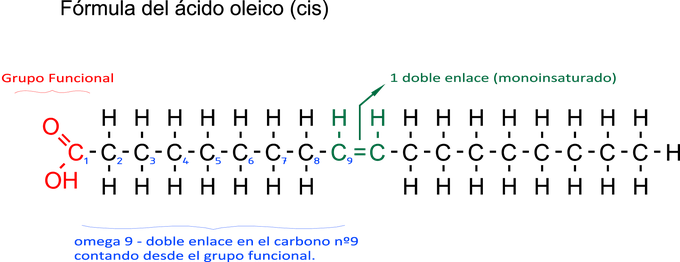
The molecular formula of oleic acid is C18H3402. The molecule of oleic acid, like all fatty acids, has a carbon chain structure where at one of the ends the functional group C-O-OH is located. Within the carbon chain, in the carbon that occupies position number 9 counting from the functional group, there is a double bond with the following carbon, this is what gives oleic acid its monounsaturated character. It is a fatty acid of the omega 9 family. Many of its health properties are derived from this chemical characteristic.
What Is the Activity of Refined Oleic Acid?
One of the primary activities of oleic acid is its role in maintaining cell membrane fluidity and integrity. Cell membranes are composed of a bilayer of phospholipids, and oleic acid, as a component of these phospholipids, helps to maintain their structure and function. This, in turn, affects cellular processes such as signal transduction, nutrient absorption, and waste elimination. Oleic acid also exhibits anti-inflammatory properties. It can reduce inflammation by inhibiting the production of inflammatory mediators and cytokines. This activity may contribute to its beneficial effects on cardiovascular health, as inflammation is a key factor in the development of heart disease. Furthermore, oleic acid has been shown to have antioxidant properties. It can help protect cells from oxidative stress and damage caused by reactive oxygen species (ROS). This antioxidant activity may contribute to the prevention of chronic diseases such as cancer and neurodegenerative disorders. Oleic acid plays a role in lipid metabolism and can affect blood lipid levels. It has been shown to lower total and LDL cholesterol levels while increasing HDL cholesterol, which is beneficial for cardiovascular health.
The quantity of fat in the diet is a serious health issue for most Americans. While the Institute of Medicine recommends you limit fat to 20 percent to 35 percent of your daily calorie intake, the average American consumes more than this. On the upside, the right types of fat in the proper amount benefit your health. You may have heard of the health benefits of omega-3 and omega-6 fats. Another class of fats, omega-9s, are also beneficial. Oleic acid belongs to this category of fats, and it's relatively easy to get it in your diet. Oleic acid is the primary fat in vegetable oils such as olive, canola and sunflower. Oleic acid is also found in nut oils, meat, poultry, cheese and foods made using oleic acid-rich vegetable oil. Some vegetable oils are specially produced to contain very high oleic acid content. You may notice oils labeled "high-oleic acid" at your local grocer. For example, high-oleic sunflower oil is typically composed of at least 80 percent oleic acid, according to the National Sunflower Association. It's crucial to choose healthy food sources of oleic acid, since it's found in a wide variety of foods, some of which aren't necessarily health-promoting. Oleic acid sources that contribute to the highest intake in the American diet include grain-based desserts, chicken, sausages, nuts, pizza, burgers, beef, eggs, regular cheese, potato chips, salad dressing, dairy desserts and yeast breads, according to the Center for Nutrition Policy and Promotion. Not all of these foods have stellar health profiles. So getting oleic acid from some of these sources may do more harm than good, since you'll also get excess calories, saturated fat and refined sugar in the process.
Getting Refined Oleic Acid in Your Diet
If you're looking to replace saturated fats in your diet with healthier fats, such as oleic acid, stick with natural, whole food or minimally processed sources such as a variety of nuts, seeds, avocados and cold-pressed vegetable oils such as safflower, almond and sunflower. You can easily add a handful of nuts to yogurt, smoothies and protein shakes or have them as a snack between meals. You can give crunch to salads by adding seeds or include them in your trail mix as a snack. Use oleic-acid rich oil on your salad in place of traditional dressing, or drizzle oil on your salmon or other protein as finishing oil. You can also use oleic-acid rich oil in your marinades. The Academy of Nutrition and Dietetics recommends getting between 1.3 grams and 2.7 grams of ALA each day for every 2,000 calories you consume. This is easy to do if you consume flaxseeds because just 1 tablespoon provides 2.4 grams of ALA. In comparison, a 3-ounce serving of salmon or herring contains about 1.8 grams of omega-3 fats in the form of EPA and DHA, which is more than three times the recommended minimum intake of 500 milligrams per day for EPA and DHA.
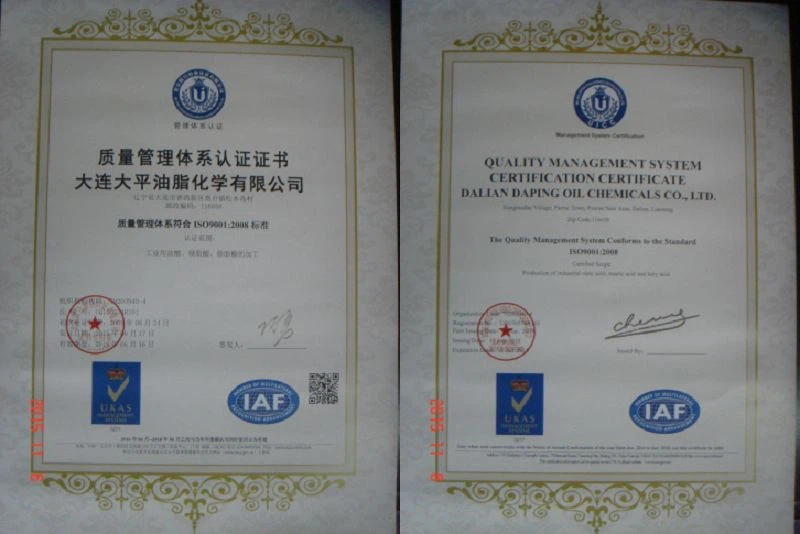
Our Certifications
Our Factory
Our corporation was established in 1988 and it's a large-scale private enterprise specializing in production, processing, research and development of soybean oil chemicals. With a history of 30 years on oil industry from 1988 to 2018, it enjoys great reputation in the industry. With business increase of the enterprise and its increase in market share it prossesses, we established a new morden garden-type factory at Dalian chemical garden with the investment capital of RMB100,000,000.- in 2007. The new factory covers are area of 77,000m2 and has almost 200 employees.

Ultimate FAQ Guide to Refined Oleic Acid
We're one of the most professional refined oleic acid manufacturers in China. If you're interested in refined oleic acid, please be free to check price and quotation with us. Also, free sample is available.
food grade oleic acid, bulk oleic acid, oleic acid for detergents-
![Anti Gel For Diesel Fuel]() Anti Gel For Diesel FuelDescription:Vegetable BaseAppearance:LiquidProduct Summery:FAC producted through hydrolysis, distillation and otherread more
Anti Gel For Diesel FuelDescription:Vegetable BaseAppearance:LiquidProduct Summery:FAC producted through hydrolysis, distillation and otherread more -
![Best Anti Gel Diesel Fuel Additive]() Best Anti Gel Diesel Fuel AdditiveDescription:Vegetable BaseAppearance:LiquidProduct Summery:FAC producted through hydrolysis, distillation and otherread more
Best Anti Gel Diesel Fuel AdditiveDescription:Vegetable BaseAppearance:LiquidProduct Summery:FAC producted through hydrolysis, distillation and otherread more -
![Anti Gel Diesel Additive]() Anti Gel Diesel AdditiveDescription:Vegetable BaseAppearance:LiquidProduct Summery:FAC producted through hydrolysis, distillation and otherread more
Anti Gel Diesel AdditiveDescription:Vegetable BaseAppearance:LiquidProduct Summery:FAC producted through hydrolysis, distillation and otherread more -
![Diesel Fuel Supplement Cetane Boost]() Diesel Fuel Supplement Cetane BoostDescription:Vegetable BaseAppearance:LiquidProduct Summery:FAC producted through hydrolysis, distillation and otherread more
Diesel Fuel Supplement Cetane BoostDescription:Vegetable BaseAppearance:LiquidProduct Summery:FAC producted through hydrolysis, distillation and otherread more -
![Hot Shots Diesel Anti Gel]() Hot Shots Diesel Anti GelDescription:Vegetable BaseAppearance:LiquidProduct Summery:FAC producted through hydrolysis, distillation and otherread more
Hot Shots Diesel Anti GelDescription:Vegetable BaseAppearance:LiquidProduct Summery:FAC producted through hydrolysis, distillation and otherread more -
![Diesel Winter Anti Gel]() Diesel Winter Anti GelDescription:Vegetable BaseAppearance:LiquidProduct Summery:FAC producted through hydrolysis, distillation and otherread more
Diesel Winter Anti GelDescription:Vegetable BaseAppearance:LiquidProduct Summery:FAC producted through hydrolysis, distillation and otherread more