-
![Stearic Acid Iodine Value Lower Than 10 Rubber Grade]() Stearic Acid Iodine Value Lower Than 10 Rubber GradeDescription:Vegetable BaseAppearance:White PowderPacking:25Kgs Net/Woven Plastic BagApplications:FAC producted through hydrolysis, distillation and other processes based on vegetable oil. Suitable for cosmetics, soap bar, rubber industry,read more
Stearic Acid Iodine Value Lower Than 10 Rubber GradeDescription:Vegetable BaseAppearance:White PowderPacking:25Kgs Net/Woven Plastic BagApplications:FAC producted through hydrolysis, distillation and other processes based on vegetable oil. Suitable for cosmetics, soap bar, rubber industry,read more -
![Rubber Grade Triple Press Distilled Stearic Acid]() Rubber Grade Triple Press Distilled Stearic AcidDescription:Vegetable Base Appearance:White Powder Packing:25Kgs Net/Woven Plastic Bag Applications:FAC producted through hydrolysis, distillation and other processes based on vegetable oil. Suitable for cosmetics, soap bar, rubberread more
Rubber Grade Triple Press Distilled Stearic AcidDescription:Vegetable Base Appearance:White Powder Packing:25Kgs Net/Woven Plastic Bag Applications:FAC producted through hydrolysis, distillation and other processes based on vegetable oil. Suitable for cosmetics, soap bar, rubberread more -
![White Powder Stearic Acid Manufacture/supplier]() White Powder Stearic Acid Manufacture/supplierDescription:Vegetable BaseAppearance:White PowderPacking:25Kgs Net/Woven Plastic BagApplications:FAC producted through hydrolysis, distillation and other processes based on vegetable oil. Suitable for cosmetics, soap bar, rubber industry,read more
White Powder Stearic Acid Manufacture/supplierDescription:Vegetable BaseAppearance:White PowderPacking:25Kgs Net/Woven Plastic BagApplications:FAC producted through hydrolysis, distillation and other processes based on vegetable oil. Suitable for cosmetics, soap bar, rubber industry,read more -
![Pulk Price Of Stearic Acid Powder Mukml]() Pulk Price Of Stearic Acid Powder MukmlClassification:Carboxylic AcidCAS No.:57-11-4Other Names:organic stearic acidPlace of Origin:Liaoning, ChinaGrade Standard:Industrial GradePurity:99.7%Appearance:White Powder, White PowderApplication:rubber industry,flotation agentBrandread more
Pulk Price Of Stearic Acid Powder MukmlClassification:Carboxylic AcidCAS No.:57-11-4Other Names:organic stearic acidPlace of Origin:Liaoning, ChinaGrade Standard:Industrial GradePurity:99.7%Appearance:White Powder, White PowderApplication:rubber industry,flotation agentBrandread more -
![Stearic Acid Slab/stearic Acid For Pvc]() Stearic Acid Slab/stearic Acid For PvcClassification:Carboxylic AcidCAS No.:57-11-4Other Names:organic stearic acidPlace of Origin:Liaoning, ChinaGrade Standard:Industrial GradePurity:99.7%Appearance:White Powder, White PowderApplication:rubber industry,flotation agentBrandread more
Stearic Acid Slab/stearic Acid For PvcClassification:Carboxylic AcidCAS No.:57-11-4Other Names:organic stearic acidPlace of Origin:Liaoning, ChinaGrade Standard:Industrial GradePurity:99.7%Appearance:White Powder, White PowderApplication:rubber industry,flotation agentBrandread more -
![Stearic Acid Beads Triple Pressed]() Stearic Acid Beads Triple PressedClassification:Carboxylic AcidCAS No.:57-11-4Other Names:organic stearic acidPlace of Origin:Liaoning, ChinaGrade Standard:Industrial GradePurity:99.7%Appearance:White Powder, White PowderApplication:rubber industry,flotation agentBrandread more
Stearic Acid Beads Triple PressedClassification:Carboxylic AcidCAS No.:57-11-4Other Names:organic stearic acidPlace of Origin:Liaoning, ChinaGrade Standard:Industrial GradePurity:99.7%Appearance:White Powder, White PowderApplication:rubber industry,flotation agentBrandread more -
![Soybean Stearic Acid Manufacture Lowest Price]() Soybean Stearic Acid Manufacture Lowest PriceDescription:Vegetable BaseAppearance:White PowderPacking:25Kgs Net/Woven Plastic BagApplications:FAC producted through hydrolysis, distillation and other processes based on vegetable oil. Suitable for cosmetics, soap bar, rubber industry,read more
Soybean Stearic Acid Manufacture Lowest PriceDescription:Vegetable BaseAppearance:White PowderPacking:25Kgs Net/Woven Plastic BagApplications:FAC producted through hydrolysis, distillation and other processes based on vegetable oil. Suitable for cosmetics, soap bar, rubber industry,read more -
![Vegetable Base Soya Stearic Acid for Industry]() Vegetable Base Soya Stearic Acid for IndustryDescription:Vegetable Base Appearance:White Powder Packing:25Kgs Net/Woven Plastic Bag Applications:FAC producted through hydrolysis, distillation and other processes based on vegetable oil. Suitable for cosmetics, soap bar, rubberread more
Vegetable Base Soya Stearic Acid for IndustryDescription:Vegetable Base Appearance:White Powder Packing:25Kgs Net/Woven Plastic Bag Applications:FAC producted through hydrolysis, distillation and other processes based on vegetable oil. Suitable for cosmetics, soap bar, rubberread more -
![Soya Stearic Acid for Rubber Industry]() Soya Stearic Acid for Rubber IndustryDescription:Vegetable Base Appearance:White Powder Packing:25Kgs Net/Woven Plastic Bag Applications:FAC producted through hydrolysis, distillation and other processes based on vegetable oil. Suitable for cosmetics, soap bar, rubberread more
Soya Stearic Acid for Rubber IndustryDescription:Vegetable Base Appearance:White Powder Packing:25Kgs Net/Woven Plastic Bag Applications:FAC producted through hydrolysis, distillation and other processes based on vegetable oil. Suitable for cosmetics, soap bar, rubberread more -
![Soya Stearic Acid for Plastic Industry]() Soya Stearic Acid for Plastic IndustryDescription:Vegetable Base Appearance:White Powder Packing:25Kgs Net/Woven Plastic Bag Applications:FAC producted through hydrolysis, distillation and other processes based on vegetable oil. Suitable for cosmetics, soap bar, rubberread more
Soya Stearic Acid for Plastic IndustryDescription:Vegetable Base Appearance:White Powder Packing:25Kgs Net/Woven Plastic Bag Applications:FAC producted through hydrolysis, distillation and other processes based on vegetable oil. Suitable for cosmetics, soap bar, rubberread more -
![Soya Stearic Acid in High Quality]() Soya Stearic Acid in High QualityDescription:Vegetable Base Appearance:White Powder Packing:25Kgs Net/Woven Plastic Bag Applications:FAC producted through hydrolysis, distillation and other processes based on vegetable oil. Suitable for cosmetics, soap bar, rubberread more
Soya Stearic Acid in High QualityDescription:Vegetable Base Appearance:White Powder Packing:25Kgs Net/Woven Plastic Bag Applications:FAC producted through hydrolysis, distillation and other processes based on vegetable oil. Suitable for cosmetics, soap bar, rubberread more


Rich Experience
Our corporation was established in 1988 and it's a large-scale private enterprise specializing in production, processing, research and development of soybean oil chemicals. With a history of 30 years on oil industry from 1988 to 2018, it enjoys great reputation in the industry.
Reliable Product Quality
Our corporation takes soybean oil production or tallow production as the raw materials, adpops the most advanced equipments and special rectification techniques to to produce genuine oleic acid and high quality streaic acid etc.
Wide Range Of Applications
Our production have been widely applied to chemical and medical industries, etc which are the indispensable basic materials.
Reliable Customer Support
Our team provides reliable customer support, and we take pride in our prompt response and resolution time.resolution time.
Soya stearic acid is is a type of saturated fatty acid derived from soybeans. It is a long-chain fatty acid with a carbon chain length of 18 carbons and a straight-chain structure. Soya stearic acid is solid at room temperature and has a high melting point, making it suitable for use in various industrial applications.
Enhances Moisture Retention
There’s a good reason why Palmitic Acid Soya Base has become such a mainstay in moisturizer formulas. Palmitic Acid Soya Base acts as an emollient, forming a protective barrier on the skin's surface. This barrier reduces water loss, promoting enhanced moisture retention. This benefit is particularly advantageous for individuals with dry or dehydrated skin, as it helps alleviate dryness and flakiness.
Strengthens The Skin Barrier
In addition to giving the skin some much-needed hydration, Palmitic Acid Soya Base also acts as a protector. Palmitic Acid Soya Base forms a moisture barrier that prevents loss of moisture or hydration from our skin. A strong barrier is important for retaining moisture and defending against external aggressors (think: cold, dry air, and pollution), which is why soya stearic acid can be an extra beneficial addition to your routine during the winter months.
Improves Formula Texture And Stabilization
As a thickening agent, Palmitic Acid Soya Base contributes to the luxurious texture of skin-care products. This quality enhances the spreadability of creams and lotions, providing a smooth, velvety feel upon application. This benefit appeals to those seeking a sensory and indulgent experience in their skin-care routine. If you love the feel of rich and thick creams, we highly suggest opting for products that feature this mighty ingredient.
Application of Palmitic Acid Soya Base
Cosmetics and Personal Care Products
Soya stearic acid helps to stabilize emulsions in creams, lotions, and other personal care products, ensuring a smooth and consistent texture. It can be used to increase the viscosity of products, providing a more luxurious feel and improving spreadability. Its lubricating properties make it suitable for use in skin care products, where it can help to smoothen the skin and enhance its appearance.
Food Industry
Soya stearic acid is used in food products such as margarine, chocolates, and bakery items to improve their texture and mouthfeel. It helps to stabilize emulsions and dispersions in processed foods, enhancing their shelf life and consistency.
Industrial Applications
In the manufacturing industry, soya stearic acid is used as a lubricant in machinery and equipment to reduce friction and wear. It can also be used as a surfactant in detergents and cleaners, assisting in the removal of dirt and grease.
Understanding Palmitic Acid Soya Base and Its Role in Soy Candles
Soya stearic acid is solid at room temperature and has a waxy texture, making it an ideal ingredient for candle making. When it comes to soy candles, soya stearic acid serves multiple purposes that contribute to the overall quality and performance of the finished product.
One primary role of soya stearic acid in soy candles is to increase the melt point and hardness of the wax. Soy wax, although popular for its natural and eco-friendly qualities, has a relatively low melt point. By adding soya stearic acid, you can raise the melt point of the wax, making the candles more resistant to heat and preventing them from melting too quickly.
In addition to enhancing the candle’s durability, soya stearic acid also plays a vital role in improving the appearance and texture of soy candles. It acts as a texturizer, adding a smooth and glossy finish to the candles, which enhances their visual appeal. Furthermore, soya stearic acid helps reduce frosting, which is a common issue in soy candles where a white, powdery substance forms on the surface. Using soya stearic acid can minimize this problem, resulting in a more aesthetically pleasing candle.
Another benefit of soya stearic acid is that it aids in fragrance retention. Soy wax has a reputation for its excellent fragrance throw, and the addition of soya stearic acid can further enhance the scent diffusion in your candles. The soya stearic acid helps to bind the fragrances and release them slowly, allowing for a longer-lasting and more intense fragrance experience.
Understanding the role of soya stearic acid in soy candles is crucial for achieving desired results. By utilizing the unique properties of soya stearic acid, you can create candles that are visually appealing, have a longer burn time, and emit captivating scents. In the next sections, we will explore how to determine the optimal amount of soya stearic acid to use in your soy candles and the factors to consider when making this decision.
Determining the Optimal Amount of Palmitic Acid Soya Base for Soy Candles


When it comes to determining the optimal amount of soya stearic acid to use in your soy candles, there are several factors to consider. The amount of soya stearic acid will impact various aspects of the candle, including its burn time, scent throw, texture, and appearance. Finding the right balance is crucial for achieving the desired results.
One important factor to consider is the type and quality of your soy wax. Different soy waxes have varying levels of natural additives and already contain a certain amount of soya stearic acid. It’s important to check the manufacturer’s guidelines for your particular soy wax and take that into account when calculating the amount of additional soya stearic acid to use.
Another factor is the desired outcome of your candles. If you are looking for a harder, more durable candle with a higher melt point, you may opt for a higher percentage of soya stearic acid. On the other hand, if you prioritize a softer, more creamy texture, you might choose a lower percentage or even omit soya stearic acid altogether.
It’s also important to consider the fragrance load in your candles. If you plan to use a high concentration of fragrance oils, you may need to increase the amount of soya stearic acid to help bind and retain the scent in the wax. Fragrances with higher flashpoints may also necessitate the use of more soya stearic acid for optimal performance.
Additionally, the diameter and height of your candles can impact the amount of soya stearic acid needed. Larger candles generally require more soya stearic acid to ensure proper hardness and heat resistance, while smaller candles may need less to achieve the desired results.
A common starting point for determining the optimal amount of soya stearic acid is around 2-5% of the total wax weight. However, this is just a general guideline, and it’s important to experiment and make adjustments based on your specific preferences and requirements. Keep in mind that adding too much soya stearic acid can result in a chalky texture or affect the scent throw, while adding too little may not provide the desired effects.
When calculating the amount of soya stearic acid, it’s always a good idea to test a small batch first. This way, you can evaluate the performance of the candles, make any necessary adjustments, and ensure consistency in your final product.
By carefully considering these factors and conducting small-scale tests, you can determine the optimal amount of soya stearic acid to use in your soy candles. Next, let’s move on to the step-by-step guide on how to calculate and add soya stearic acid to your candles to achieve the desired results.
Factors to Consider When Choosing the Amount of Palmitic Acid Soya Base
Choosing the right amount of soya stearic acid for your soy candles is essential for achieving the desired results. There are several factors to consider when making this decision, each of which can influence the performance, texture, and appearance of your candles.
Wax Type
The type of soy wax you use will play a role in determining the amount of soya stearic acid needed. Different soy waxes have varying levels of additives and soya stearic acid content, so it’s important to refer to the manufacturer’s guidelines for recommended usage levels.
Desired Hardness
Consider the level of hardness you want in your candles. soya stearic acid increases the melt point and hardness of the wax, providing a more durable candle. If you prefer a harder candle, you might opt for a higher percentage of soya stearic acid. However, if you prefer a softer, more malleable candle, you may choose to use a lower percentage or omit soya stearic acid altogether.
Scent Throw
The amount of fragrance oil used in your candles can impact the amount of soya stearic acid needed. Fragrance oils with higher flashpoints may require more soya stearic acid to help bind and retain the scent in the wax. Experiment with different fragrance loads to find the right balance for optimal scent throw.
Candle Size
Consider the size and shape of your candles. Larger candles generally require more soya stearic acid to achieve the desired hardness and heat resistance, while smaller candles may require less. The diameter and height of the candle can also impact the amount of soya stearic acid needed.
Aesthetic Factors
Think about the texture and appearance you want to achieve in your candles. soya stearic acid acts as a texturizer, providing a smooth and glossy finish to the candles. It can also help reduce frosting. Consider the visual appeal you desire and adjust the amount of soya stearic acid accordingly.
Step-by-Step Guide to Calculating and Adding Palmitic Acid Soya Base to Soy Candles
Calculating and adding the right amount of soya stearic acid to your soy candles is crucial for achieving the desired results. Follow this step-by-step guide to ensure a successful incorporation of soya stearic acid into your candle-making process:
Step 1: Gather Your Supplies
Before you begin, gather all the necessary supplies, including your soy wax, soya stearic acid, fragrance oils (if desired), a double boiler or a melting pot, a thermometer, a heat-resistant container, and your candle molds or containers.
Step 2: Determine Your Wax Weight
Weigh the amount of soy wax you’ll be using for your candles. Note down the weight, as you’ll need this information for calculating the appropriate amount of soya stearic acid to add.
Step 3: Calculate the Percentage of soya stearic acid
Decide on the desired percentage of soya stearic acid based on factors such as wax type, hardness preference, scent throw, and candle size. As a starting point, aim for 2-5% of the total wax weight. Multiply the weight of the soy wax by the chosen percentage to determine the weight of soya stearic acid to add.
Step 4: Melt the Soy Wax
Using a double boiler or melting pot, melt the soy wax at a moderate heat until it reaches the recommended melting point. Stir occasionally to ensure even melting. Monitor the temperature using a thermometer to prevent overheating.
Step 5: Add the Soya Stearic Acid
Once the soy wax is fully melted and has reached the desired temperature (refer to the manufacturer’s guidelines for recommended temperature ranges), add the calculated amount of soya stearic acid to the melted wax. Stir gently until the soya stearic acid is completely dissolved and evenly distributed in the wax.
Step 6: Optional: Add Fragrance Oils
If desired, this is the time to add your chosen fragrance oils to the wax. Follow the recommended usage rate provided by the fragrance manufacturer. Stir gently to incorporate the fragrance into the wax.
Step 7: Pour the Wax into Molds or Containers
Carefully pour the melted wax with soya stearic acid (and fragrance oils, if added) into your chosen candle molds or containers. Be sure to leave enough room at the top for the wick and any additional decorations you may want to add.
Step 8: Allow the Candles to Cool and Set
Let the candles cool and solidify at room temperature, undisturbed, for several hours. This will allow the soya stearic acid and wax to form a solid bond and ensure the candles retain their desired texture and appearance.
Step 9: Trim the Wick and Enjoy!
Trim the wick to the appropriate length, generally around ¼ inch, before lighting your candles. Now, sit back, relax, and enjoy the beautiful, fragrant glow of your newly created soy candles!
Using soya stearic acid in soy candle making can elevate your candle-making skills and improve the performance and aesthetics of your candles. Here are some valuable tips and tricks to help you make the most out of incorporating soya stearic acid into your soy candle-making process:
Start with Small Batches
If you’re new to using soya stearic acid, it’s recommended to start with small batches and experiment with different ratios. This allows you to fine-tune the amount of soya stearic acid based on your preferences and specific candle-making requirements.
Mix Thoroughly
When adding soya stearic acid to your melted soy wax, ensure thorough mixing to achieve a uniform dispersion. Stir gently but consistently to ensure the soya stearic acid is fully dissolved and evenly distributed throughout the wax. This will help prevent any clumps or uneven textures in your finished candles.


Test Burn Times
As you adjust the amount of soya stearic acid in your soy candles, make note of the burn times of each batch. This will help you determine the ideal ratio for achieving the desired burn rate that aligns with the size and type of candle you’re creating.
Monitor Temperatures
Pay close attention to the temperature of both the soy wax and soya stearic acid mixture. Be sure to stay within the recommended temperature range provided by the soy wax manufacturer. This will help prevent any issues with consistency or adhesion between the two components.
Use High-Quality Ingredients
Opt for high-quality soy wax and soya stearic acid to ensure the best results in your candle making. Inferior quality ingredients may result in inferior performance and affect the overall quality of your candles.
Be Mindful of Fragrance Load
The addition of soya stearic acid can affect the way fragrance oils bind and scent your candles. Take note of any changes in fragrance throw when using soya stearic acid and adjust the fragrance load if necessary. It’s a good idea to test different combinations and ratios to find the perfect balance between soya stearic acid and fragrances.
Experiment with Different Textures
Soya stearic acid can offer different textures to your candles, ranging from a smooth and glossy finish to a more rustic appearance. Play around with the amount of soya stearic acid to achieve the desired texture that complements your candle design and aesthetic preferences.
Consider Safety Precautions
Always prioritize safety when working with soya stearic acid and other candle-making materials. Follow proper candle-making guidelines, including using protective equipment, working in a well-ventilated area, and handling hot wax with caution. Stay informed about any potential hazards and take appropriate measures to ensure a safe working environment.

Common Mistakes to Avoid When Using Palmitic Acid Soya Base in Soy Candles
Using soya stearic acid in soy candle making can bring numerous benefits to your candles. However, there are certain common mistakes that can negatively impact the outcome of your candles. By avoiding these mistakes, you can ensure a successful and enjoyable candle-making experience. Here are some common mistakes to watch out for when using soya stearic acid in soy candles:
Adding Too Much Soya Stearic Acid
One of the most common mistakes is adding an excessive amount of soya stearic acid. While soya stearic acid improves the hardness and heat resistance of the wax, using too much can result in a chalky texture and negatively impact the scent throw. It’s important to follow the recommended guidelines and gradually increase the amount of soya stearic acid until you achieve the desired results.
Neglecting to Test Small Batches
Failing to test your candle recipe with small batches can lead to disappointment and wasted resources. Each type of soy wax and fragrance oil combination reacts differently to soya stearic acid. Testing small batches allows you to make adjustments and find the optimal ratio of soya stearic acid for your specific candle-making needs.
Ignoring Manufacturer’s Guidelines
Different types of soy wax have varying levels of soya stearic acid content and recommended usage levels. It’s crucial to refer to the manufacturer’s guidelines to ensure that you’re using the correct amount of soya stearic acid for your specific soy wax brand. Ignoring these guidelines can lead to subpar results and affect the overall quality of your candles.
Inadequate Mixing
Proper mixing is essential when incorporating soya stearic acid into your soy wax. Failing to mix thoroughly can result in uneven distribution of soya stearic acid, leading to clumps or inconsistencies in your candles. Take the time to stir gently but consistently to achieve a uniform dispersion of soya stearic acid within the wax.
Overheating the Wax
Overheating the soy wax and soya stearic acid mixture can degrade the quality of the wax and affect the performance of the candles. It’s important to monitor and maintain the recommended temperature range provided by the soy wax manufacturer. Excessive heat can cause the wax to lose its natural properties and may result in a lower-quality finished product.
Neglecting Safety Precautions
Safety should always be a top priority when working with soya stearic acid and other candle-making materials. Neglecting to follow necessary safety precautions, such as using protective equipment or handling hot wax with care, can lead to accidents and injuries. Familiarize yourself with the proper safety guidelines and take the necessary precautions to ensure a safe working environment.
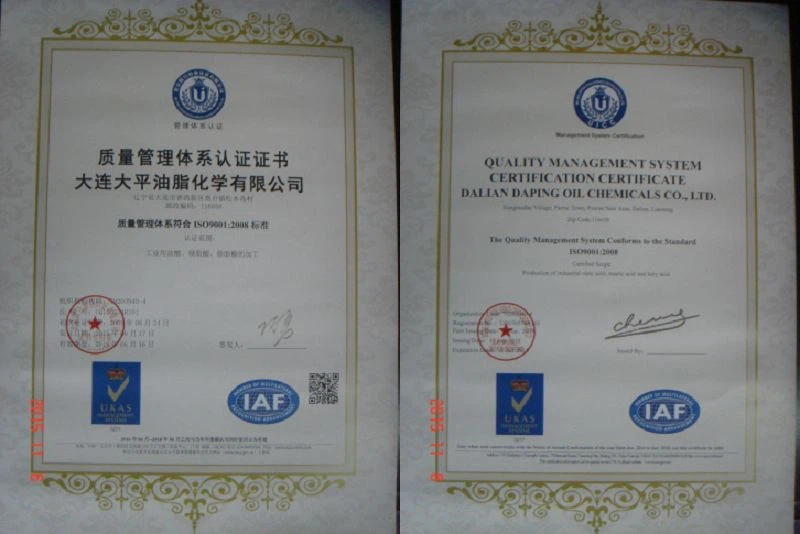
Our Certifications
Our Factory
Our corporation was established in 1988 and it's a large-scale private enterprise specializing in production, processing, research and development of soybean oil chemicals. With a history of 30 years on oil industry from 1988 to 2018, it enjoys great reputation in the industry. With business increase of the enterprise and its increase in market share it prossesses, we established a new morden garden-type factory at Dalian chemical garden with the investment capital of RMB100,000,000.- in 2007. The new factory covers are area of 77,000m2 and has almost 200 employees.

Ultimate FAQ Guide to Palmitic Acid Soya Base
We're one of the most professional Palmitic Acid Soya Base manufacturers in China. If you're interested in Palmitic Acid Soya Base, please be free to check price and quotation with us. Also, free sample is available.
yellowish soya stearic acid, soya stearic acid for elasticity control agents, soya stearic acid for volume control agents-
![Feeder Grade Palmitic Acid]() Feeder Grade Palmitic AcidPalmitic acid is a high-energy substance that undergoes β-oxidation in animals to release substantial energy. It servesread more
Feeder Grade Palmitic AcidPalmitic acid is a high-energy substance that undergoes β-oxidation in animals to release substantial energy. It servesread more -
![Anti Gel For Diesel Fuel]() Anti Gel For Diesel FuelDescription:Vegetable BaseAppearance:LiquidProduct Summery:FAC producted through hydrolysis, distillation and otherread more
Anti Gel For Diesel FuelDescription:Vegetable BaseAppearance:LiquidProduct Summery:FAC producted through hydrolysis, distillation and otherread more -
![Best Anti Gel Diesel Fuel Additive]() Best Anti Gel Diesel Fuel AdditiveDescription:Vegetable BaseAppearance:LiquidProduct Summery:FAC producted through hydrolysis, distillation and otherread more
Best Anti Gel Diesel Fuel AdditiveDescription:Vegetable BaseAppearance:LiquidProduct Summery:FAC producted through hydrolysis, distillation and otherread more -
![Anti Gel Diesel Additive]() Anti Gel Diesel AdditiveDescription:Vegetable BaseAppearance:LiquidProduct Summery:FAC producted through hydrolysis, distillation and otherread more
Anti Gel Diesel AdditiveDescription:Vegetable BaseAppearance:LiquidProduct Summery:FAC producted through hydrolysis, distillation and otherread more -
![Diesel Fuel Supplement Cetane Boost]() Diesel Fuel Supplement Cetane BoostDescription:Vegetable BaseAppearance:LiquidProduct Summery:FAC producted through hydrolysis, distillation and otherread more
Diesel Fuel Supplement Cetane BoostDescription:Vegetable BaseAppearance:LiquidProduct Summery:FAC producted through hydrolysis, distillation and otherread more -
![Hot Shots Diesel Anti Gel]() Hot Shots Diesel Anti GelDescription:Vegetable BaseAppearance:LiquidProduct Summery:FAC producted through hydrolysis, distillation and otherread more
Hot Shots Diesel Anti GelDescription:Vegetable BaseAppearance:LiquidProduct Summery:FAC producted through hydrolysis, distillation and otherread more