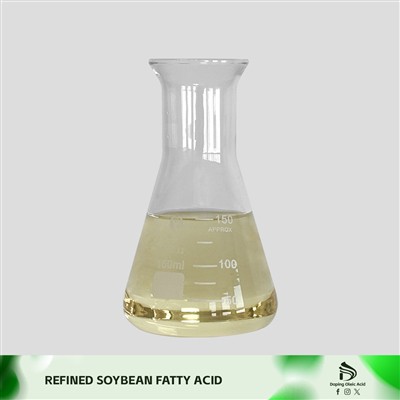
In the realm of industrial lubrication, the search for high - performance, cost - effective, and environmentally friendly raw materials is a continuous endeavor. As a supplier of refined oleic acid, I am often asked whether this product can be used in the production of lubricating greases. In this blog post, I will delve into the properties of refined oleic acid, its potential applications in lubricating grease production, and the benefits it can bring to this industry.
Properties of Refined Oleic Acid
Refined oleic acid is a monounsaturated omega - 9 fatty acid with the chemical formula C₁₈H₃₄O₂. It is commonly derived from natural sources such as vegetable oils and animal fats. The refinement process removes impurities, resulting in a high - purity product with consistent quality.
One of the key properties of refined oleic acid is its excellent lubricity. Due to its long hydrocarbon chain and polar carboxyl group, it can form a thin, protective film on metal surfaces. This film reduces friction between moving parts, which in turn minimizes wear and tear, and extends the service life of machinery.
Another important characteristic is its chemical stability. Refined oleic acid has good resistance to oxidation and thermal degradation under normal operating conditions. This means that lubricating greases formulated with it can maintain their performance over a wide range of temperatures and in various environments.
Potential Applications in Lubricating Grease Production
Lubricating greases are semi - solid lubricants that are used to reduce friction, prevent wear, and protect machinery from corrosion. They are typically composed of a base oil, a thickener, and various additives. Refined oleic acid can play multiple roles in the production of these greases.
As a Base Oil Component
Refined oleic acid can be used as a partial or complete replacement for traditional mineral - based base oils. Mineral oils, while widely used, have some limitations. They are non - renewable and can have a negative environmental impact. In contrast, refined oleic acid is derived from renewable resources and is biodegradable.
When used as a base oil, refined oleic acid provides good solubility for additives, which is crucial for formulating high - performance greases. It also has a relatively low pour point, which means that greases containing it can maintain their fluidity at low temperatures. This is particularly important for applications in cold environments, such as in outdoor machinery during winter.
As an Additive
In addition to being a base oil, refined oleic acid can also serve as an additive in lubricating grease formulations. It can act as an anti - wear agent, reducing the friction coefficient between metal surfaces and preventing metal - to - metal contact. This is especially beneficial in high - load applications, where the risk of wear is significant.

Moreover, refined oleic acid can function as a corrosion inhibitor. The polar carboxyl group in its structure can react with metal surfaces to form a protective layer that prevents the penetration of oxygen and moisture, thus protecting the metal from rust and corrosion.
Benefits of Using Refined Oleic Acid in Lubricating Greases
Environmental Friendliness
As mentioned earlier, refined oleic acid is derived from renewable sources, such as vegetable oils. This makes it a more sustainable option compared to traditional mineral - based lubricants. In an era where environmental regulations are becoming increasingly strict, using greases formulated with refined oleic acid can help companies meet their sustainability goals and reduce their carbon footprint.
Cost - Effectiveness
Although the initial cost of refined oleic acid may be slightly higher than that of some mineral oils, its benefits in terms of performance and longevity can lead to cost savings in the long run. Greases containing refined oleic acid have better anti - wear and anti - corrosion properties, which means that machinery will require less frequent maintenance and replacement of parts. This can result in significant cost savings for businesses.
High - Performance
Refined oleic acid - based lubricating greases offer excellent performance in a wide range of applications. They can operate effectively under high - load, high - temperature, and low - temperature conditions. This versatility makes them suitable for various industries, including automotive, manufacturing, and aerospace.
Case Studies and Examples
There have been numerous successful applications of refined oleic acid in lubricating grease production. For example, in the automotive industry, greases formulated with refined oleic acid have been used in wheel bearings. These greases provide excellent lubrication, reducing friction and wear, and improving fuel efficiency.
In the manufacturing sector, refined oleic acid - based greases have been used in heavy - duty machinery. They can withstand high loads and temperatures, ensuring smooth operation and minimizing downtime.
Related Products
If you are interested in exploring other applications of oleic acid, we also offer related products such as Fatty Acid Oil For Painting/oleic Fatty Acid, Refined Soyabean Oil For Alkyd, and High Quality Oleic Acid For Flotation Agent Alkyd Resin. These products have their unique properties and applications in different industries.
Conclusion
In conclusion, refined oleic acid has great potential in the production of lubricating greases. Its excellent lubricity, chemical stability, environmental friendliness, and cost - effectiveness make it an attractive option for formulating high - performance greases. Whether you are looking for a sustainable alternative to traditional lubricants or a way to improve the performance of your machinery, refined oleic acid is definitely worth considering.
If you are interested in purchasing refined oleic acid for your lubricating grease production or have any questions about our products, please feel free to contact us for further discussion. We are committed to providing high - quality products and professional services to meet your specific needs.
References
- Smith, J. (2018). "The Chemistry of Fatty Acids and Their Applications in Lubrication". Journal of Industrial Chemistry, 25(3), 123 - 135.
- Johnson, A. (2019). "Sustainable Lubricants: The Role of Renewable Fatty Acids". Environmental Science and Technology, 32(2), 201 - 210.
- Brown, C. (2020). "High - Performance Lubricating Greases: Formulation and Performance". Tribology International, 45(4), 345 - 356.