Hey there! I'm a supplier from a stearic acid factory, and today I wanna chat about the profit margin of a stearic acid factory.
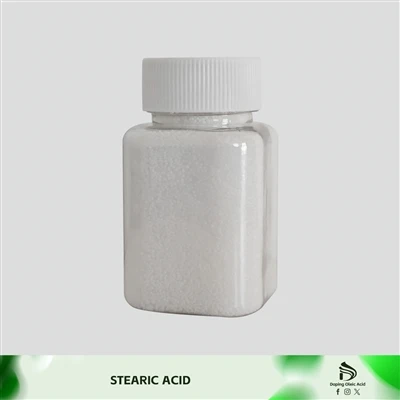
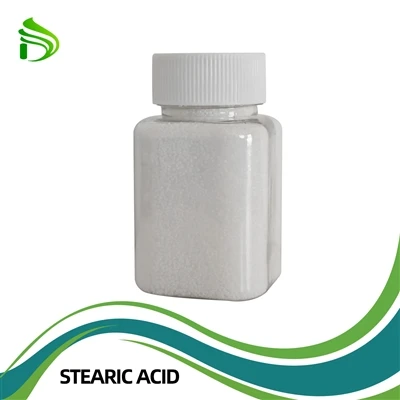
First off, let's understand what stearic acid is. Stearic acid is a saturated fatty acid that's widely used in various industries. It's used in the production of candles, soaps, cosmetics, and even in the rubber industry. There are different grades of stearic acid, like Grade Stearic Acid, Stearic Acid Rubber Grade, and Rubber Grade Triple Press Distilled Stearic Acid. Each grade has its own specific uses and market demands.
Now, let's dig into the factors that affect the profit margin of a stearic acid factory.
Raw Material Costs
The cost of raw materials is a major factor. Stearic acid is usually derived from natural fats and oils, like palm oil or tallow. The price of these raw materials can fluctuate a lot. For example, if there's a bad harvest of palm oil due to weather conditions, the price of palm oil will go up. This directly impacts the cost of producing stearic acid. When the raw material costs are high, the profit margin of the factory gets squeezed. As a supplier, I always keep an eye on the raw material market to anticipate these price changes.
Production Costs
Production costs include things like labor, energy, and equipment maintenance. Labor costs can vary depending on the region where the factory is located. In some areas, labor is relatively cheap, while in others, it can be quite expensive. Energy costs are also a big deal. Running a stearic acid factory requires a lot of energy for processes like heating and distillation. If the price of electricity or other energy sources goes up, it can eat into the profit margin. And don't forget about equipment maintenance. Regular maintenance is necessary to keep the production process running smoothly, but it also adds to the overall cost.
Market Competition
The stearic acid market is quite competitive. There are many suppliers out there, and each one is trying to attract customers. This competition can drive down the prices of stearic acid. If a factory wants to increase its market share, it might have to lower its prices. But this can also mean a lower profit margin. To stay competitive, factories need to find ways to differentiate their products. For example, they can focus on producing high - quality stearic acid or offer better customer service.


Quality and Purity
The quality and purity of stearic acid can have a big impact on the profit margin. Higher - quality stearic acid can command a higher price in the market. Customers in industries like cosmetics and pharmaceuticals are willing to pay more for stearic acid with a high degree of purity. Factories that can produce high - quality stearic acid can have a higher profit margin. However, achieving and maintaining high quality also requires more investment in production processes and quality control.
Market Demand
The demand for stearic acid in different industries can vary. For example, the demand for stearic acid in the rubber industry might be affected by the growth of the automotive industry. If the automotive industry is booming, the demand for rubber will increase, and so will the demand for stearic acid used in rubber production. On the other hand, if there's a slowdown in the cosmetics industry, the demand for stearic acid used in cosmetics will decrease. Factories need to be able to adapt to these changes in market demand to maintain a good profit margin.
So, how do we calculate the profit margin of a stearic acid factory? The basic formula for profit margin is:
Profit Margin = (Total Revenue - Total Costs) / Total Revenue * 100%
Total revenue is the money the factory makes from selling stearic acid. This depends on the price per unit of stearic acid and the quantity sold. Total costs include all the costs we mentioned above, like raw material costs, production costs, and marketing costs.
Let's say a factory sells stearic acid at $1000 per ton, and it sells 100 tons in a month. So the total revenue is $1000 * 100 = $100,000. If the total costs, including raw materials, labor, energy, and other expenses, are $80,000, then the profit is $100,000 - $80,000 = $20,000. The profit margin is ($20,000 / $100,000) * 100% = 20%.
As a supplier, I know that maintaining a good profit margin is crucial for the long - term success of the factory. We need to constantly find ways to reduce costs and increase revenue. One way is to optimize the production process to reduce waste and improve efficiency. Another way is to expand into new markets or develop new products.
If you're in the market for stearic acid, whether it's Grade Stearic Acid, Stearic Acid Rubber Grade, or Rubber Grade Triple Press Distilled Stearic Acid, I'd love to have a chat with you. We can discuss your specific needs and see how we can work together to meet them.
In conclusion, the profit margin of a stearic acid factory is influenced by many factors, and it's a complex balance between costs, quality, and market demand. By understanding these factors and making smart decisions, factories can achieve a healthy profit margin.
References
- Industry reports on stearic acid production and market trends
- Economic studies on raw material prices and their impact on manufacturing industries