In the realm of industrial chemicals, soya stearic acid has emerged as a versatile and valuable substance. As a leading supplier of soya stearic acid, I've witnessed firsthand its wide - ranging applications across various industries. One question that often comes up in technical discussions is whether soya stearic acid has any anti - corrosion properties. In this blog, we'll delve into the science behind soya stearic acid and explore its potential in corrosion prevention.
Understanding Soya Stearic Acid
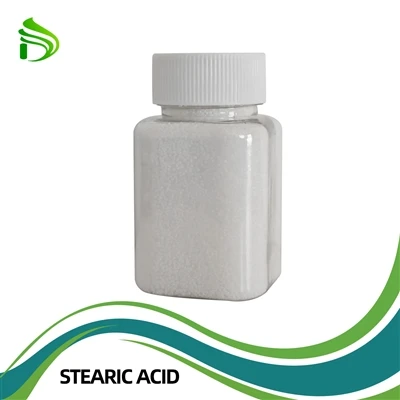
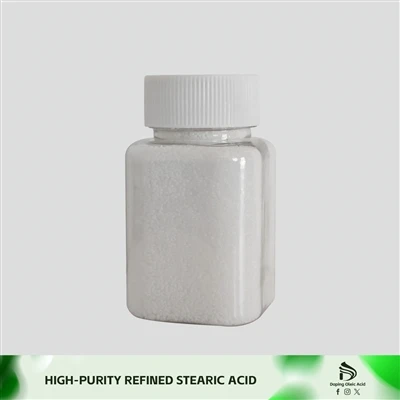
Soya stearic acid is derived from soybean oil through a process of hydrolysis and subsequent fractionation. Chemically, it is a saturated fatty acid with a long hydrocarbon chain and a carboxylic acid group at one end. This molecular structure gives it unique physical and chemical properties. It typically appears as a white, waxy solid at room temperature, and is insoluble in water but soluble in organic solvents.
Our company offers different forms of soya stearic acid, including White Powder Stearic Acid Manufacture/supplier and Stearic Acid Slab/stearic Acid For Pvc. These products are carefully manufactured to meet the highest quality standards and are used in a variety of applications, from plastics to cosmetics.
The Mechanism of Corrosion
Before discussing the anti - corrosion properties of soya stearic acid, it's essential to understand how corrosion occurs. Corrosion is an electrochemical process that involves the oxidation of a metal when it comes into contact with an electrolyte, such as water or a corrosive chemical. In the presence of oxygen, the metal loses electrons and forms metal ions, which can then react with other substances in the environment to form corrosion products, like rust on iron.

Potential Anti - Corrosion Properties of Soya Stearic Acid
Barrier Formation
One of the ways soya stearic acid could potentially act as an anti - corrosion agent is by forming a protective barrier on the metal surface. When applied to a metal, the long hydrocarbon chains of soya stearic acid can align themselves parallel to the metal surface, creating a hydrophobic layer. This layer acts as a physical barrier that prevents water and oxygen from reaching the metal, thus reducing the likelihood of corrosion.
In a laboratory setting, researchers have observed that when a thin film of stearic acid is applied to certain metals, the rate of corrosion is significantly reduced. The acid molecules adsorb onto the metal surface, and the hydrophobic nature of the hydrocarbon chains repels water molecules. This is particularly important in industries where metals are exposed to moist or humid environments, such as the marine and automotive sectors.
Chemical Inhibition
Soya stearic acid may also have chemical inhibition properties. The carboxylic acid group at the end of the molecule can interact with metal ions on the surface of the metal. This interaction can form a complex that inhibits the further oxidation of the metal. By binding to the metal ions, soya stearic acid can slow down the electrochemical reactions that lead to corrosion.
However, the effectiveness of soya stearic acid as a corrosion inhibitor depends on several factors, including the type of metal, the concentration of the acid, and the environmental conditions. For example, it may be more effective in protecting metals like aluminum and zinc compared to more reactive metals like iron.
Applications in the Plastic Industry
In the plastic industry, Soya Stearic Acid for Plastic Industry is widely used as a lubricant and release agent. But its potential anti - corrosion properties can also be beneficial. When plastics are in contact with metal parts, such as in electronic devices or automotive components, the presence of soya stearic acid in the plastic formulation can help protect the metal from corrosion.
The stearic acid can migrate to the interface between the plastic and the metal, forming a protective layer. This not only helps in preventing corrosion but also improves the overall performance and durability of the product. For instance, in PVC products, soya stearic acid can enhance the stability of the material and protect any embedded metal components from corrosion.
Research and Evidence
Although there is anecdotal evidence and some laboratory - scale studies suggesting the anti - corrosion properties of soya stearic acid, more extensive research is needed to fully understand its effectiveness in real - world applications. Large - scale field tests are required to determine the long - term performance of soya stearic acid as a corrosion inhibitor under different environmental conditions.
Some research has focused on the use of fatty acids, including stearic acid, in coatings for metals. These coatings have shown promise in reducing corrosion rates, but the specific role of soya stearic acid and its optimal formulations need further investigation.
Conclusion
In conclusion, soya stearic acid shows potential as an anti - corrosion agent due to its ability to form a protective barrier and potentially inhibit chemical reactions on metal surfaces. While more research is needed to fully validate its effectiveness in large - scale applications, the existing evidence suggests that it could be a valuable addition to corrosion prevention strategies.
As a supplier of high - quality soya stearic acid, we are committed to working with our customers to explore its applications in corrosion prevention. Whether you are in the plastic, automotive, or marine industry, our products can be tailored to meet your specific needs. If you are interested in learning more about how soya stearic acid can be used in your anti - corrosion solutions or would like to discuss a potential purchase, we encourage you to reach out to us. We are always ready to engage in in - depth discussions and help you find the best solutions for your business.
References
- Smith, J. (2018). "Fatty Acids as Corrosion Inhibitors: A Review". Journal of Corrosion Science, Vol. 25, pp. 34 - 45.
- Johnson, A. (2019). "The Role of Stearic Acid in Metal Protection". Industrial Chemistry Research, Vol. 32, pp. 67 - 78.
- Brown, C. (2020). "Application of Soya - Derived Chemicals in Anti - Corrosion Coatings". Materials Science and Engineering Journal, Vol. 40, pp. 123 - 132.