When people talk about ink, they often focus on color, gloss, or drying speed. But inside every drop of industrial ink lies something more fundamental - chemistry that decides how the ink performs on metal, paper, or film. Among these unseen ingredients, Soybean Fatty Acid IV120 plays a quiet yet essential role. It is not a pigment, not a solvent, but the part that makes ink durable, flexible, and stable under industrial conditions.
In industrial terms, IV120 stands for an iodine value of about 120, a measure of how unsaturated the fatty acid molecule is. This level of unsaturation means that the molecule has enough double bonds to stay reactive in polymer synthesis, yet remains stable enough for long-term storage. That balance is exactly what the ink industry needs - a reactive, flexible fatty acid that can participate in resin formation without causing instability.
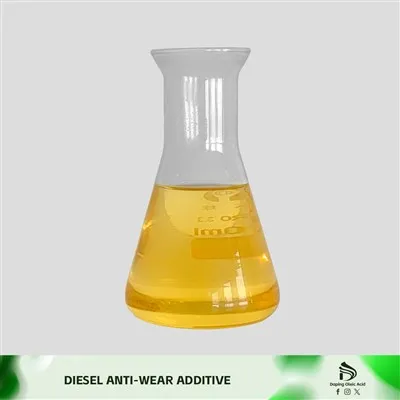
Most IV120 used in the ink industry is derived from soybean oil, a renewable raw material that offers consistent chemical structure and steady supply. Through a controlled hydrolysis and purification process, the fatty acids are separated, refined, and adjusted to meet the exact iodine value requirement. The result is a pale-yellow, transparent liquid that blends smoothly into alkyd resins, creating the molecular backbone of printing inks.
In practical use, Soybean Fatty Acid IV120 is valued for how it behaves during resin polymerization. When used in alkyd resin synthesis, it provides an ideal balance between hardness and flexibility in the final film. This balance determines how well the ink adheres to the surface and how it resists cracking or peeling after drying. Unlike lower-iodine fatty acids, which can make resins too rigid, or higher-iodine ones that oxidize too fast, IV120 sits comfortably in the middle - reactive enough to build molecular bonds, yet stable enough to resist premature aging.
Beyond mechanical performance, it also improves the flow and leveling properties of inks. In high-speed printing, the ink must move smoothly through rollers without clogging or uneven spreading. The molecular structure of IV120 provides natural lubrication that helps the ink spread evenly and dry uniformly. This contributes directly to the surface quality - the gloss, color uniformity, and texture that customers notice.
Another important reason IV120 is favored in the ink industry lies in its oxidation resistance. Industrial inks face exposure to light, heat, and oxygen. Poorly refined fatty acids can yellow or degrade over time, affecting the visual quality of printed products. Well-purified soybean fatty acids, however, show much better stability under these conditions. They maintain clarity and resist color change, especially when combined with metal driers or stabilizers in the ink formulation.
Environmental compliance is also shaping how the industry selects its raw materials. Over the past decade, regulations on VOC (volatile organic compounds) emissions have become stricter worldwide. Ink producers are being pushed to reduce the carbon footprint of their formulations and to choose renewable, plant-based feedstocks wherever possible. In this shift, Soybean Fatty Acid IV120 provides both performance and sustainability. It comes from a renewable agricultural source, and its chemical nature allows partial or full replacement of petroleum-derived fatty acids in alkyd systems.
Compared to alternatives like palm fatty acid or coconut fatty acid, soybean-based IV120 offers a smoother consistency and more predictable iodine value. Palm and coconut oils are typically more saturated, leading to harder films and slower reactivity. IV120, on the other hand, maintains the right level of unsaturation to promote cross-linking reactions during resin curing, resulting in coatings that remain flexible yet strong. This makes it particularly suitable for printing inks used on metal cans, packaging films, and coated papers, where mechanical durability and visual uniformity are both critical.
Another benefit worth mentioning is compatibility. In formulation, IV120 blends easily with solvents, plasticizers, and pigment dispersions. This reduces the need for extra additives and simplifies production. For manufacturers, that means smoother batch consistency, less waste, and a more stable ink formulation across temperature changes.
From a production perspective, the use of IV120 also aligns with cost efficiency and supply stability. Soybean oil is one of the most abundant vegetable oils globally, produced in large volumes in regions like South America and Asia. This ensures a reliable supply chain and reduces dependence on volatile petrochemical markets. Many ink producers appreciate that a sustainable raw material can also be economically practical - and that's part of why IV120 continues to gain ground in both traditional and modern ink systems.
Behind all these practical advantages lies the simple but powerful chemistry of fatty acids. In the polymer matrix of alkyd resins, these molecules act as flexible linkers between the rigid parts of the chain. They influence drying time, film elasticity, gloss, and even pigment dispersion. A well-formulated ink with the right fatty acid structure feels smoother to print, dries evenly, and maintains its appearance longer. Soybean Fatty Acid IV120 has proven to be one of the most reliable raw materials to achieve that balance.
As the printing and coatings industries continue to evolve, there is growing attention to renewable chemistry. More manufacturers are now developing bio-based ink systems that reduce VOC emissions and improve recyclability of packaging materials. IV120 fits naturally into this direction - offering renewable origin, strong technical performance, and excellent compatibility with alkyd resin technology.
In summary, Soybean Fatty Acid IV120 represents more than just another industrial ingredient. It is the link between chemistry and sustainability, between print performance and environmental responsibility. Its role in the ink industry may not always be visible, but every clean print, every glossy finish, and every stable coating owes something to this quietly efficient molecule.