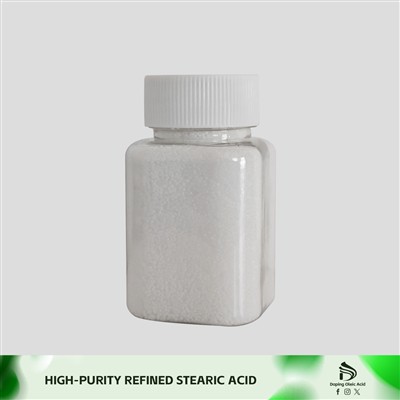
Hey there! As a supplier of Refined Soya Fatty Acid, I often get asked about the extraction methods for this valuable product. So, I thought I'd take a moment to share some insights on how we get Refined Soya Fatty Acid from soybeans.
1. Solvent Extraction
One of the most common methods for extracting fatty acids from soybeans is solvent extraction. This process starts with cleaning and crushing the soybeans to increase the surface area for extraction. Then, a solvent, usually hexane, is used to dissolve the oil from the crushed soybeans. The mixture of solvent and oil is then separated from the solid residue.
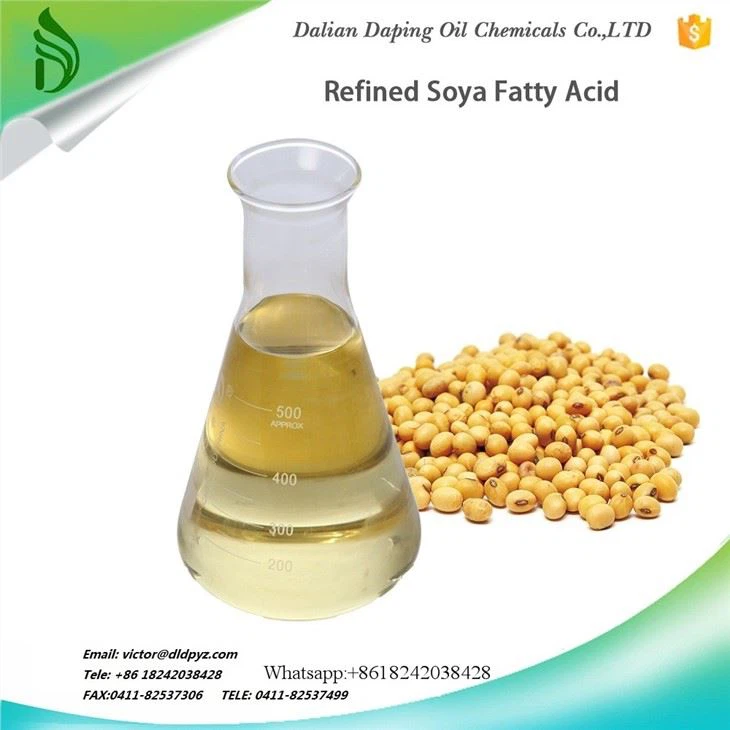
The solvent is then removed from the oil through evaporation, leaving behind crude soybean oil. This crude oil contains a variety of fatty acids, along with other impurities. To obtain Refined Soya Fatty Acid, the crude oil undergoes further refining processes such as degumming, neutralization, bleaching, and deodorization.
Solvent extraction is a highly efficient method as it can extract a large amount of oil from soybeans. However, it does have some drawbacks. Hexane is a flammable and potentially toxic solvent, so proper safety measures need to be in place during the extraction process. Also, the solvent residues in the final product need to be carefully monitored to ensure they meet the required safety standards.
2. Mechanical Pressing
Another method for extracting oil from soybeans is mechanical pressing. In this method, the soybeans are first cleaned and then passed through a press. The pressure applied by the press squeezes out the oil from the soybeans.
There are two types of mechanical pressing: cold pressing and hot pressing. Cold pressing is done at a relatively low temperature, usually below 40°C. This method helps to preserve the natural flavor and nutritional value of the oil. However, the yield of oil from cold pressing is relatively low compared to hot pressing.
Hot pressing, on the other hand, is done at a higher temperature, typically around 100 - 120°C. The higher temperature helps to break down the cell walls of the soybeans, allowing more oil to be extracted. But this method can also cause some changes in the chemical composition of the oil and may reduce its nutritional value.
After the oil is extracted through mechanical pressing, it still needs to be refined to obtain Refined Soya Fatty Acid. The refining process is similar to that used in solvent extraction, including degumming, neutralization, bleaching, and deodorization.
3. Enzymatic Extraction
Enzymatic extraction is a more recent and environmentally friendly method for extracting fatty acids from soybeans. This method uses enzymes to break down the cell walls of the soybeans and release the oil.
Enzymes such as cellulases, hemicellulases, and proteases are added to a mixture of soybeans and water. These enzymes break down the cellulose, hemicellulose, and proteins in the cell walls, making it easier to extract the oil. The oil is then separated from the aqueous phase through centrifugation or other separation techniques.
One of the advantages of enzymatic extraction is that it can be carried out at relatively low temperatures, which helps to preserve the quality of the oil. It also produces fewer waste products compared to solvent extraction. However, enzymatic extraction is currently more expensive than solvent extraction and mechanical pressing, mainly due to the cost of the enzymes.
4. Supercritical Fluid Extraction
Supercritical fluid extraction (SFE) is a modern and advanced method for extracting fatty acids from soybeans. In this method, a supercritical fluid, usually carbon dioxide (CO₂), is used as the extraction solvent.
A supercritical fluid has properties between those of a gas and a liquid. It can penetrate the solid matrix of the soybeans easily and dissolve the fatty acids. The extraction process is carried out at high pressure and temperature, where CO₂ becomes supercritical. After the extraction, the pressure is reduced, and the CO₂ returns to its gaseous state, leaving behind the extracted fatty acids.
SFE has several advantages. CO₂ is non - toxic, non - flammable, and environmentally friendly. The extraction process can be carried out at relatively low temperatures, which helps to preserve the quality of the fatty acids. Also, the extracted products are free from solvent residues. However, SFE requires specialized equipment and high - pressure conditions, which makes it a more expensive extraction method.
Our Products and Applications
As a supplier of Refined Soya Fatty Acid, we offer high - quality products that are suitable for a wide range of applications. For example, our Oleic Acid For Flotation Agent is widely used in the mining industry for separating minerals from ores. It has excellent flotation performance and can improve the efficiency of the flotation process.
Our Soya Bean Oil Fatty Acid/refined Oleic Acid is used in various industries such as cosmetics, lubricants, and detergents. It has good emollient properties and can be used as a raw material for making high - quality products.
We also provide OLEIC ACID For Iron Lithium Magnetite Collecting Agent, which is specifically designed for the collection of iron lithium magnetite in the mining industry. It has strong collecting ability and can improve the recovery rate of the minerals.
Why Choose Our Refined Soya Fatty Acid
We take pride in our products and services. Our Refined Soya Fatty Acid is produced using the latest extraction and refining technologies to ensure high quality and purity. We have strict quality control measures in place at every stage of the production process, from raw material selection to the final product packaging.
We also offer competitive prices and excellent customer service. Our team is always ready to answer your questions and provide you with technical support. Whether you are a small - scale business or a large - scale industrial user, we can meet your needs.
Contact Us for Purchase
If you are interested in our Refined Soya Fatty Acid products, we'd love to hear from you. Whether you have questions about the extraction methods, product specifications, or pricing, feel free to reach out to us. We are looking forward to starting a business relationship with you and providing you with the best Refined Soya Fatty Acid solutions.
References
- Johnson, L. A., & Lusas, E. W. (1983). Soybeans: Chemistry, Technology, and Utilization. Van Nostrand Reinhold.
- King, J. W., & List, G. R. (1996). Supercritical Fluid Extraction and Its Use in the Food Industry. Critical Reviews in Food Science and Nutrition, 36(5), 459 - 477.
- Gunstone, F. D., Harwood, J. L., & Padley, F. B. (2007). The Lipid Handbook. CRC Press.