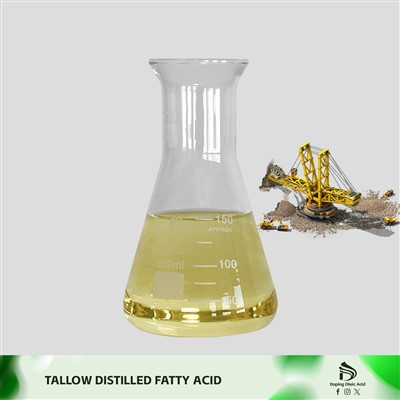
Hey there! As a supplier of fatty acid prices, I've seen firsthand how the quality of fatty acids can have a huge impact on their price. In this blog, I'm gonna break down the key factors that link fatty acid quality to their market value.
Let's start with the basics. Fatty acids are basically the building blocks of fats and oils. They come in different types, mainly saturated, monounsaturated, and polyunsaturated. Each type has its own unique chemical structure and properties, which in turn affect their quality and price.
Saturated fatty acids are those with no double bonds in their carbon chain. They're usually solid at room temperature, like the fat you find in butter. Generally, saturated fatty acids are cheaper compared to their unsaturated counterparts. Why? Well, they're more stable and less prone to oxidation, which means they have a longer shelf - life. This makes them easier to produce and store, driving down the cost. But they're also associated with higher cholesterol levels, so their demand in some health - conscious markets might be limited.
On the other hand, unsaturated fatty acids, including monounsaturated and polyunsaturated ones, have one or more double bonds in their carbon chains. Monounsaturated fatty acids, like those found in olive oil, are liquid at room temperature and are considered heart - healthy. They're more expensive because they're more difficult to produce and process. The extraction and purification processes for these fatty acids are more complex, and they're also more susceptible to oxidation, which requires special storage conditions.
Polyunsaturated fatty acids, such as omega - 3 and omega - 6 fatty acids, are even pricier. These are essential fatty acids that our bodies can't produce on their own, so we have to get them from our diet. They're found in fish oil, flaxseed oil, and other sources. The high cost is due to several factors. First, the sources of these fatty acids are often limited. For example, getting omega - 3 from fish requires sustainable fishing practices, which can be costly. Second, the extraction and refinement processes are very intricate to ensure the purity and quality of the fatty acids.


Another aspect of fatty acid quality that affects price is the degree of purity. High - purity fatty acids are in high demand, especially in industries like pharmaceuticals, cosmetics, and food. For instance, in the pharmaceutical industry, fatty acids are used as excipients or active ingredients. A higher purity level means fewer impurities, which is crucial for the safety and efficacy of the final product. Achieving high purity involves advanced purification techniques, such as distillation and chromatography, which are expensive. So, high - purity fatty acids command a premium price.
The iodine value (IV) of fatty acids is also an important quality parameter. The iodine value measures the degree of unsaturation in a fatty acid. A higher IV indicates a higher degree of unsaturation. Fatty acids with a high IV, like the High IV Oleic Acid Suitable For Dimer Acid Alkyd Resin Surfactant Synthetic Detergent/soyabean Fatty Acid, are often more reactive and have different properties compared to those with a low IV. They're used in specific applications, such as in the production of alkyd resins and surfactants. Since they're tailored for these specialized uses, they tend to be more expensive.
The source of the fatty acids also plays a role in determining their quality and price. For example, Soya Fatty Acid 291615/112 - 80 - 1 is derived from soybeans. The quality of the soybeans, the growing conditions, and the extraction methods all affect the quality of the fatty acids. If the soybeans are grown in optimal conditions and the extraction process is efficient, the resulting fatty acids will be of higher quality and can be sold at a higher price.
In the market, there are also different grades of fatty acids. Premium - grade fatty acids are of the highest quality, with strict quality control measures throughout the production process. These are often used in high - end products where quality is non - negotiable. Standard - grade fatty acids are more commonly used in general applications, and they're priced lower.
Now, let's talk about how all these quality factors translate into price. When the quality of fatty acids is high, the production costs go up. This includes the cost of raw materials, the cost of processing, and the cost of quality control. As a result, the price of the fatty acids in the market also increases. For example, a batch of high - purity, high - IV fatty acids will cost significantly more than a batch of low - purity, saturated fatty acids.
But it's not just about the production costs. The demand for high - quality fatty acids also drives up the price. In industries where the quality of the final product depends on the quality of the fatty acids, such as the cosmetic and pharmaceutical industries, companies are willing to pay a premium for top - notch fatty acids. On the other hand, in industries where cost is a major concern, like some industrial applications, lower - quality fatty acids might be preferred.
As a fatty acid price supplier, I understand the importance of balancing quality and price. We offer a wide range of fatty acids, from standard - grade to premium - grade, to meet the diverse needs of our customers. Whether you're looking for Fatty Acid Oil/fatty Acid Liquid for industrial use or high - purity fatty acids for pharmaceutical applications, we've got you covered.
If you're interested in purchasing fatty acids, I encourage you to get in touch with us. We can provide you with detailed information about our products, including their quality, price, and applications. We're always happy to have a chat and help you find the best fatty acid solution for your needs.
References
- "Lipid Biochemistry" by John M. Lowenstein
- "Fatty Acids in Foods and Their Health Implications" by Ching Kuang Chow